Are dried, raw and dehydrated treats safe and good for my dog / Bully sticks, pizzles, rabbit ears, pigs ears, rawhide treats, liver treats, fish skins for puppies / Nutrition advice for dog owners / How to choose dog treats safely? / Dangers of raw and dehydrated dog chews / Fanconi syndrome in dogs / Perfect cocker spaniel (C) dog blog, cocker spaniel advice, health tips, grooming tips, puppy training, diet, questions / Natalia Ashton

Q&A | Can I give my puppy dried & dehydrated treats?

Once upon a time, when Cooper was a little puppy, we took him for a walk in the wild where the boy met another cocker spaniel. And as all pup parents we stop and chatted about the way our pups are raised, groomed and fed. At one point the other pup’s dad mentioned that he swears by natural treats…. freshly shot pigeons, rabbit ears covered in fur, raw bones, dried chicken legs… the list went on. At the time I never heard of those.

I did a bit of googling upon return, found a few things, but never felt convinced enough to give them to my puppy.

A few years on, and there is a huge array of treats available around to keep the dogs happy.

But are they actually safe?

The first thing you need to bear in mind is that very few of those treats would be suitable for a cocker spaniel puppy. The only exception is sweet potato but even those need to be looked at with caution because, as it happened last year, they can arrive covered in mould due to poor manufacturing or storage.

Any dehydrated body parts may suit an adult dog with a robust digestive system, but they contain too much protein (pigs ears, for example, contain 73%) for a little puppy and thus can increase the risk digestive upsets as well as skeletal problems in the future.

Additionally, not every company can guarantee complete product safety, so the chews and treats may be contaminated with bacteria, toxins (as a by-product of bacteria lifecycle or from the animal source), pathogens or chemical residue (unless you can absolutely guarantee that the animal has never been treated with antibiotics or fed a pesticide-free diet, just to give you an idea)

For example, when a study published in Canadian Veterinary Journal examined 26 random bully sticks, all 26 were found to be contaminated with bacteria including Clostridium difficile, MRSA, and E. coli. It followed the 2019 case when FDA issues a recall for all pig ear treats due to salmonella outbreak.

An adult dog may show no symptoms and have no side-effects, but the puppy’s gut defences are still weak and can be affected.

There is also a possibility that the asymptomatic dog will shed salmonella for about 7 days, potentially passing it onto his human family.

Some animal body parts can contain high levels of specific minerals and vitamins, which can potentially cause vitamin and mineral imbalance in the dog’s body.

Others, like pig ears, are naturally high in fat and can lead to weight gain, diarrhoea and even increased risk of pancreatitis.

Certain body organs can naturally contain hormones. If a dog regularly consumes such treats, his own endocrine system can be affected.

Treats add calories. It is known that a typical 20cm raw hide chew can contain as much as 100 calories, which is roughly 15-20% of your dog’s daily requirement. Considering that all treats should fall below 10%, anything on top can lead to weight gain and obesity. Reducing the amount of food your dog eats for a sake of giving him a chew can create a deficit or excess of major nutrients and cause problems.

Not every chew is safe. Some can splinter, others can cause blockages or perforations of the gut.

Antlers, hoves, horns and bones may be extremely popular among dogs, but they are also  a major concern among vets because these can cause jaw dislocation and broken teeth, especially in dogs who really do love to chew hard.

Fish skins are suitable for most dogs, but not puppies under 4 months of age.

Liver treats appeal to all dogs, but they are incredibly rich in vitamin A and can cause toxicity if used frequently or generously. Liver is also a detoxifying organ, so any residue from those toxins can end up in your dog’s body.

Dehydrated meats often referred to as jerky can cause Fanconi syndrome. The illness causes kidney damage, can become chronic and even be potentially life-threatening. The symptoms of Faconi syndrome are not easy to spot and usually include changes in urination and drinking habits and can mimic the ones of diabetes, kidney disease and urinary tract infection. It is impossible to say which treats may lead to problems – so far it has been established that the issue does not relate to a particular manufacturer or a country of origin, but has to do with a certain substance in the treats. And the substance is yet to be identified.

So what can you do if you want to treat your dog safely?

Choose a trusted UK-based (or EU-based) company that  follows strict guidelines for product safety, happy to provide you with additional details and inform of any food recalls should the worst happen.

All reputable UK pet food companies should be registered with PFMA

All UK companies that produce any treats made from by-products must be approved by APHA. Depending on their set-up, they are often required to obtain a licence from a local authority, too.

Any pet food manufacturer should have at least one nutritionist who holds a veterinary degree and/or is trained in small animal clinical nutrition.

Check the packaging label for any age restriction. If you can’t find any, contact the company.

Always check the treats for signs of mould and odd smells (even though some can be a little smelly, but they should not stink)

Give these chews once a week at most, not on a daily basis.

Always supervise your dog when he is busy chewing.

If in doubt, bin – don’t feed.

Make your own treats or indulge your dog’s need to chew by giving him crunchy slices of carrots and apples.

If your dog has diagnosed health conditions, is genetically predisposed to such illnesses as pancreatitis, or requires a special diet, always consult your vet before you use these (or any) treats.


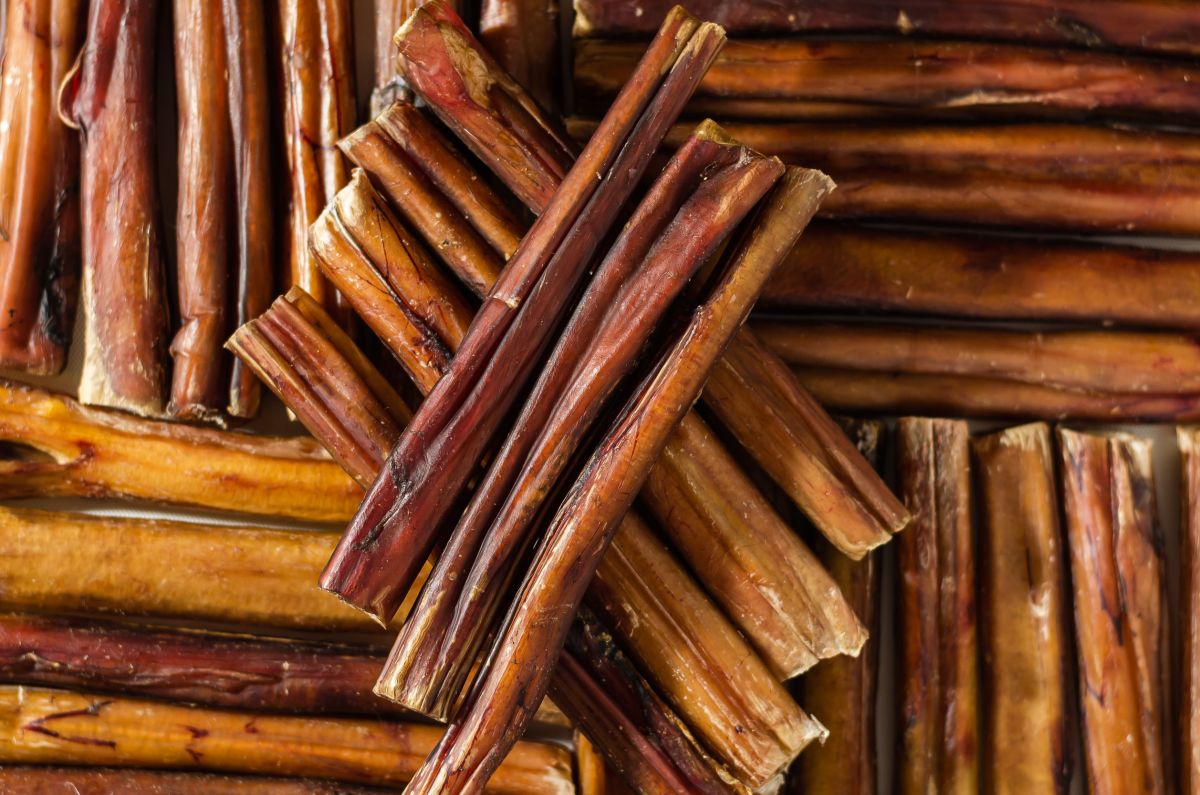
Photo credit: image by Mikhail Dmitriev for 123rf.com
What is dog's reactivity / Hyper-reactivity in dogs, barking, lunging, biting dogs / Leash reactivity, barrier frustration / Perfect cocker spaniel Dog blog

Re-activating happiness | What is reactivity, anyway?

All good things take time, so I only hope that the second chapter for my “re-activating happiness” diary is worth the wait.

Today I wanted to talk about reactivity itself because most people are simply unaware of it and many tend to mistake their dog’s reaction for aggression, which can in turn lead to some terrible outcomes.

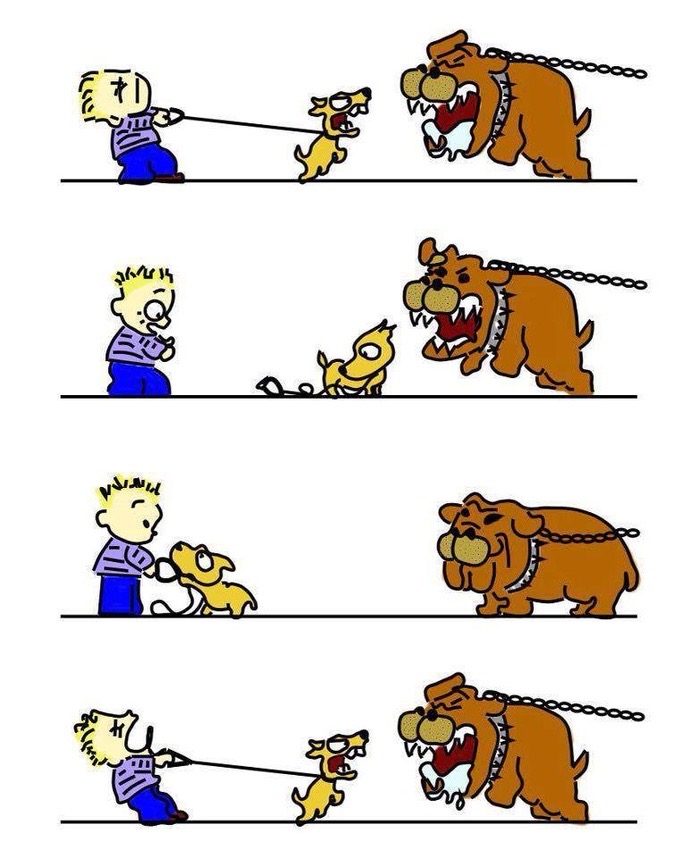
Take the cartoon above. A lot of people find it funny, but if you look closely, you can see a typical example of two leash-reactive dogs. And suddenly it’s not so entertaining anymore…

So what is reactivity?

Correctly referred to as  “hyper-reactivity”, it is a dog’s over-reaction to something or someone around him because he is unable to perceive it as safe and ordinary, or may doubt his ability to predict and control it. Objects, strangers, kids, bicycles, men in glasses, men in hats, postmen, vets, small dogs, black dogs, giant dogs and spotty dogs, dogs walking towards you or puppies bouncing in your direction… The list goes on. So the dog hides, or runs away (flee), or growls, or barks (fight)… He may pull on a lead (lead reactivity)… Or jump at a fence (barrier frustration)… He may even lunge and try to bite… Oddly to their parents, most of these dogs become soft and cuddly when in a safety of their own home, walking down a familiar empty street or running free in a deserted field.

But because of their outbursts these pups get labelled as “shy” or “noisy” or, worse, “aggressive” even though all they are trying to say is that they are simply scared of something… and do everything they can to prevent the scary scenario from happening again.

Dog's body language / ladder of aggression by BSAVA / reactivity in dogs explained / Perfect cocker spaniel, dog blog & reactivity diary of living with reactive dog

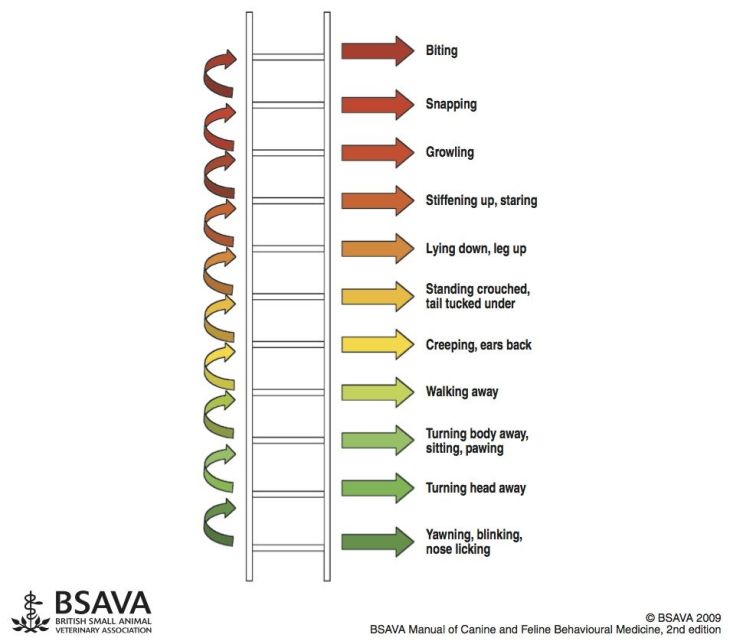
At first, they will use the subtle signs to explain their emotions. They may lick their lips or nose, turn or walk away from the “scary thing”… If this does not work, the body language will become more obvious. The dog will get lower to the ground, tuck the tail under his tummy, or freeze. In the animal world this would be enough to say “Hey, I am not comfortable, I am scared, I want you to go away, and I don’t want to fight…” Because dogs, with a few breed-related exceptions, really are not the fighters or killing machines. Even if they snap, they will never bite to hurt.

However, if the dog cannot avoid the uncomfortable situation (say, he is on a lead, the scary thing is there or approaching, or there is a fence between him and the scary stranger) or make the “object” go away, he will end up growing, snapping and even biting, as the last and most definitely, not his preferred option. He will be acting out of fear and frustration of being misunderstood, not because he is a hopelessly aggressive beast.

If the dog’s message gets lost in translation over and over again, the may eventually learn that the “building blocks” of calming body language are completely worthless and the best way to get rid of the “scary thing” is to bark, snap or bite without warning. This natural reaction soon becomes a learnt habit (also referred to as conditioned response or conditioned behaviour), so next time the dog will skip the entire body language routine and simply use the tactic that worked before – the bark, the grown or the snap.

Worse, the pooch can also end up in a constant state of stress and anxiety, expecting the “scary event” to happen at any point. As his body tries to cope with the emotional outcome of stress, it engages other systems, alters hormonal and nervous responses, uses up essential nutrients, and eventually becomes unwell physically and psychologically. The dog transforms into uncontrollable, hyperactive and anxious animal suffering from phobias that may expand from the initial object of fear to many other.

The latter is the reason why it is so important to be aware of the hyper-reactivity and either prevent from happening or helping your dog to overcome the fear if he does feel scared and has to act up to feel safe.

What can lead to hyper-reactivity?

It can be a traumatic event. It can be stress that leads to altered hormonal and brain responses. Lack of proper socialisation can be directly related to the dog’s perception of life. Pain and fear of pain can make a dog hyper-reactive, too. The over-reaction can also be caused by our own emotional state that becomes mirrored by our dogs.

At this point it is important to mention that some dogs can become reactive or prone to reactivity due to their hereditary traits or any form of emotional stress experienced by their mother during pregnancy or after the birth of the litter. Such puppies can show first signs of reactivity even before they open their eyes.

One of the most recent studies published in the January 2020 issue of Helioyn Journal also looked into microbiome (or gut flora) to discover that reactive dogs seem to have different types of bacteria compared to fearful dogs. “Different behavioral phenotypes in dogs may be associated with peculiar gut microbiome layouts, suggesting possible connections between the gut microbiome and the central nervous system,” the researches concluded.

Ageing can also be the time when a dog may suddenly become reactive, partially due to his declining health, possible aches, pains, and partially because ageing causes irreversible brain changes. Contrary to popular believe, the loss of sight or hearing does not lead to reactivity-related aggression.

The traumatic event at any point of dog’s life can also have a negative effect on his emotional state and ability to cope with any further events, especially if they happen at the same location or caused by the original stimulus. Fearful events during sensitive period of puppyhood at 8-10 weeks and “the fear period” that occurs at around 8 months of age, can make the most impact on the young dog and his life-long emotions. Having said that, even through the memory of the event can become permanent, it may be restrained and prevented from re-occuring though coaching and counter-conditioning.

Prolonged, or chronic, stress, on the other hand, can lead to permanent degenerative changes within the brain areas and alter dog’s ability to cope with any further fear or stress however minor.

What you need to take away from this is that reactivity, regardless of its extent, does not define your dog. It does not make your dog “aggressive”, “violent”, “naughty” or “lost cause”. It does not require castration as a “fix”.

All it needs is an understanding, patience and a carefully constructed plan that often involves counter-conditioning, desensitisation and games to help the dog realise that many things he is so afraid of are actually mundane and not worth his time whatsoever.

When the dog barks and growls, he needs protection and care from you, the person he loves and trusts the most. And the good things will happen… The happiness, and calmness and all that jazz. They’ll take time, but nothing is impossible.


Can my dog eat lemon? Citrus fruit toxic to dogs? Signs of citrus fruit poisoning in dogs / Psoralens toxic to dogs / What fruits contain psoralen / Perfect cocker spaniel: breed and puppy guide, dog blog, grooming tips, healthy nutrition, cocker spaniel diet, puppy diet / (C) Natalia Ashton

Can my dog eat… lemons?

Lemons are such a special fruit! They are wonderfully fragrant, tactile and full of vitamins. They add a special touch to any home decor and can even reveal a few secrets about your personality. Renoir, Matisse, Picasso, Van Gogh and Braque painted them, and fashion designers from Stella McCartney to Domenico Dolce and Stefano Gabbana turned the fabulous citrus into one of the hottest trends.

But the question is…

CAN A DOG EAT LEMONS?

The answer is No.

A bit surprising, isn’t it? Lemons do seem so innocent, after all. Yet the sunny fruit bears a dark secret unknown to many.

Lemons, just like all citrus fruit, contains psoralens, a group of compounds (phellopterin,   5- and 8-geranoxypsoralen) that belong to a chemical family of furocoumarins. The plants use these chemicals as a natural protection against pests and disease, as well as a survival mechanism that helps them adapt to the environment.

Even though lemons only contain small to moderate quantities of psoralen (the highest amount is found in the rind, pulp, seeds and any other part of the plant, the juice and flesh are less toxic), they can cause a reaction in dogs if eaten or applied on their skin.

The symptoms include digestive discomfort, vomiting, diarrhoea, and lethargy.

If you suspect that your dog has eaten any part of the lemon, you need to contact the vet.

Psoralens are also used in medications to treat psoriasis, eczema, vitiligo and a rare type of cancer called cutaneous t-cell lymphoma, so it is important to keep the drugs away from your dog and prevent the dog from licking the skin after an application of any topical creams.


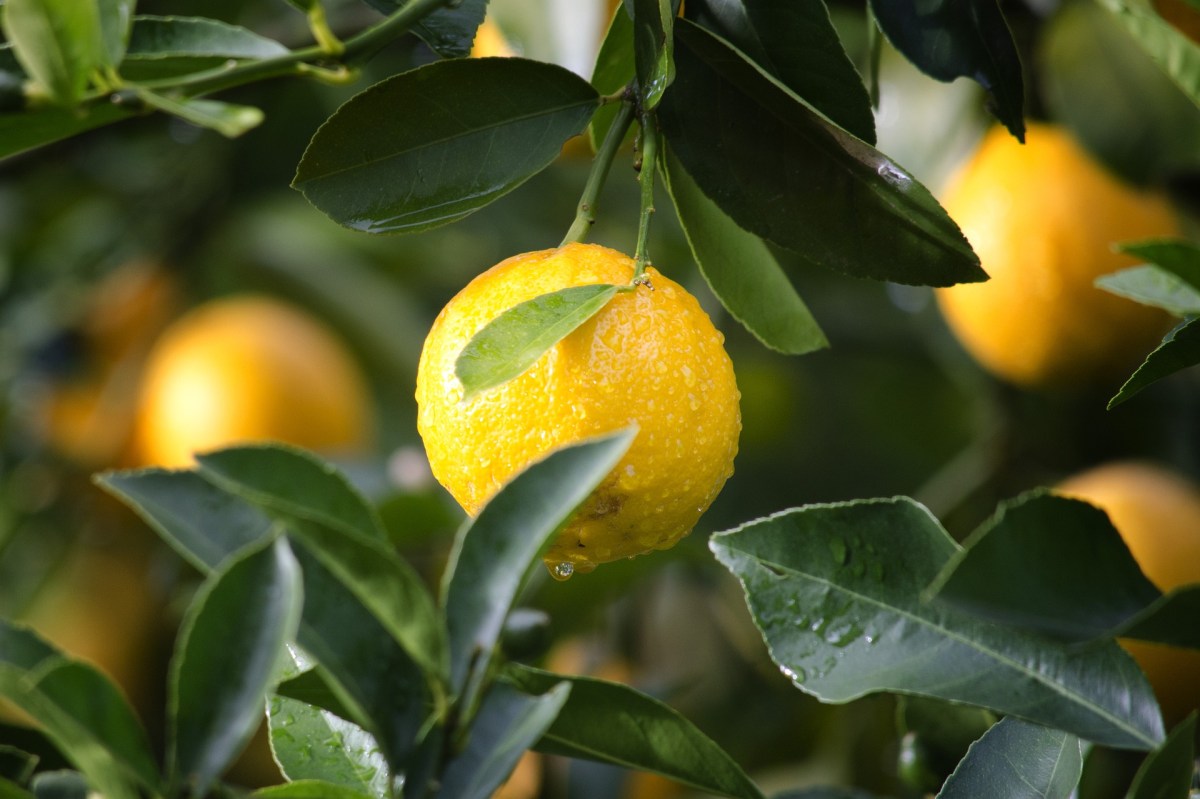
Photo credit: Pexels from Pixabay