How to prevent ear problems in English cocker spaniels / Grooming, diet, lifestyle tips / Perfect cocker spaniel breed & puppy guide, dog blog / (C) Natalia Ashton

I am all ears! | Preventing ear problems in English cocker spaniels

If a cocker spaniel puppy came with a User’s manual, the book would definitely contain a warning about ear infections.  It is true that English cockers are predisposed to issues in this area. It does not, however, mean that your dog is destined to suffer from one.

There are a few things that can cause your cocker experience an ear ache and irritation. They can be connected to genetics and anatomy, health problems elsewhere in the body, parasites such as ear mites (one of the most common triggers), environmental allergies and food sensitivities, yeast and fungi, overall health status, side-effects of some medications, lifestyle, foreign bodies such as grass seeds and, of course, grooming routine.

The most important rule here is to take the dog to a vet if you suspect anything however minor and insignificant. Guesswork, internet searches, over the counter medicines, natural remedies and ear problems do not belong together.

I love my boys’ ears. I love to look at them, photograph them, groom them, touch and stroke the silky hair and I even love the way they smell… So I make sure they stay this way – beautiful and problem-free.

That’s why today I am not going to talk about illnesses. Instead we will focus on prevention because it’s so straight forward yet so effective for keeping any problems at bay for the entire life of your dog.

So here is a list of things that I do and use myself and recommend to anyone who comes to me for advice.

Check your dog’s ears daily and be particularly vigilant if your cocker is an adventurer or avid swimmer. It helps to know what a healthy ear looks like, notice any changes in texture, skin colour, temperature and scent, and spot any odd-looking discharge or grass seeds before they get into the ear canal.

Clean your spaniel’s ears once a week and keep it simple. Simplicity is the key when it comes to ear routine. By nature the canine ear is self-cleaning, so you don’t want or need to fiddle with it too much. Do not insert anything inside the ear canal. Do not pour any solutions into the cavity either. The latter may have to be done if the dog already has problems and based on your vet’s recommendations. However, if your dog has healthy beautiful ears, all you need to do is to get two cotton pads, moisten them with an ear cleanser based on salicylic acid (the simpler the formula the better) and gently and carefully wipe the visible outer surface inside each ear. That’s all.

Trim the hair around the ear canal monthly to allow air circulation. Be cautious if using clippers – it can cause irritation. Plucking must be avoided because it can leave the skin open to infections.

Groom your dog every day, so the ears are never left wet. Leaving them to dry naturally softens the skin of the ear canal and around the edge, creates damp and warm environment, and allows infections, bacteria and yeast to thrive. Keep an eye on paws, too, because anything that affects the paws can be easily transmitted into the ears.

Brush the ears daily to avoid mats. Also don’t use clippers on your dogs ears – it will thicken the hair, make it prone to matting and trapping moisture. Use scissors or Coat King instead.

Avoid frequent bathing because it also softens the skin and increases the risk of getting the water into the ear canal. If you do bathe your dog, always protect the ears with cotton balls.

Use vet-prescribed flea and worming treatments. Besides keeping obvious parasites at bay, correctly chosen products will also prevent an ear mite infestation.

If your dog had to be on a course of antibiotics, remember to restore his gut bacteria with a course of vet-recommended probiotics and by adding some plain natural yoghurt or kefir into your cocker’s diet.

Feed your dog a complete balanced diet because it will strengthen his natural defences. It does not need to be home-made or unique. A good quality commercial age-appropriate dog food is a reliable and safe option. If unsure, consult a vet or nutritionist.

When feeding your dog, use special spaniel bowls, snoods and scrunchies to protect your cocker’s ears from getting dirty, otherwise you may end up with a dog who suddenly develops very smelly ears caused by yeast and bacteria.

You can find more information about English cockers, their health, grooming, nutrition and puppy tips in my book Perfect cocker spaniel.

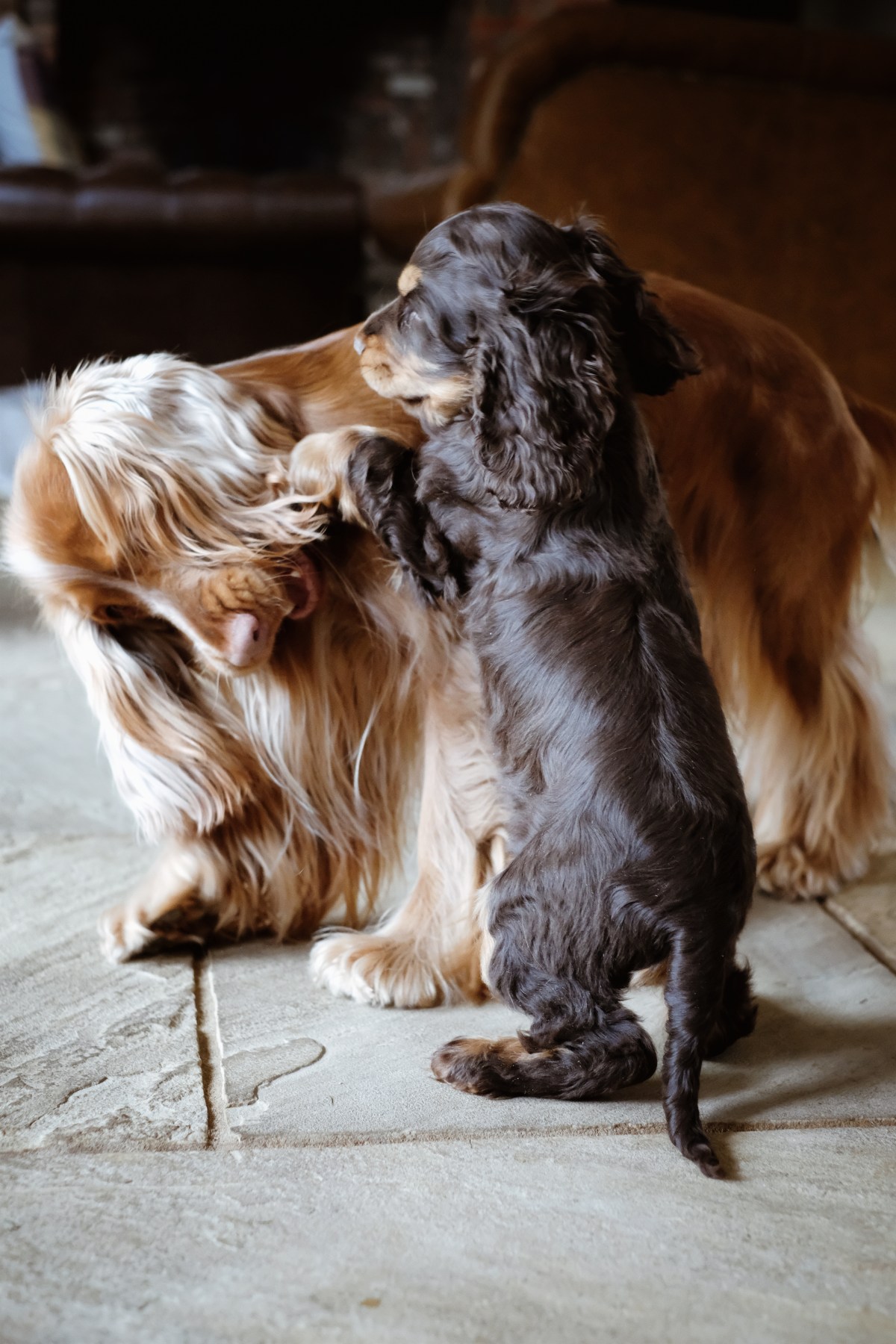
Photo credit: Cooper & Fred photographed by me

Can household chemicals be harming your dog's health / link and risk between pesticides, herbicides, phthalates, common toxic substances in cleaners, cosmetics, make-up and risk of cancer, dermatitis, skin problems, behavioural issues, aggression, obesity, allergies in dogs / Perfect cocker spaniel pet blog / puppy tips, advice, grooming, health, diet, training tip / (C) Natalia Ashton

Is your home making your dog sick?

Dogs can help us discover the link between common household chemicals and several types of human cancers, but they can get sick, too. According to the latest study published in the Journal of Environmental Science & Technology, dogs that share their living space with humans, are essentially inhaling, absorbing and retaining the same chemicals as their family.

The scientists collected the data from exposure to pesticides, OPEs (organophosphate esters), phthalates, BFRs (flame retardants), and PCBs (polychlorinated bisphenyls). These are usually found in garden products, disinfectants, pest poisons, cosmetics, plastic and vinyl toys, vinyl and certain wood flooring, plastic food wraps, detergents, baby products, mattresses and foam furniture, just to name a few. Many substances have already been linked to disease in humans, but the problem has often been about the length between the exposure to chemicals and the onset of symptoms. With their smaller bodies, the dogs do not only absorb the potentially carcinogenic agents, but can develop the disease at a much faster rate.

Whilst it is certainly a welcomed discovery in terms of our health, the research, in my view, is a very valid factor and reminder for every dog parent to be incredibly vigilant when choosing their household products, cosmetics, food items, containers, dog toys and bowls.

I have talked about this link in my book through so many pages, you could have easily mistaken me for a mad woman obsessed with “clean living”. In reality, my ideas have always been based on my nutrition background, experience and all the evidence-based scientific research that has been conducted over the years (and something I had to be aware of due to my job and simply because I love science).

There hasn’t been many studies that focused specifically on canine healths, but the ones I would like to mention here are the link between herbicides and increased risk of bladder cancer in dogs (some of them have also been shown to increase the risk of hormonal problems, liver disease and breast cancer in people, and I do believe they may have the same effect on dogs), dog’s exposure to pesticides in garden products and risk of canine malignant lymphomaBPA lining in cans of many pet foods and potential endocrine issues in dogs (in women BPA is associated with increased risk of endometriosis), increased infertility and reduced sperm quality in both dogs and humans after exposure to phthalates, increased occurrences of dermatitis and allergic reactions in dogs living in urban environment, and potential link between air fresheners and respiratory disease in dogs. And since the exposure to daily household chemicals has also been found to lead to obesity, behavioural and learning issues in humans, I would not be surprised if the dogs turned out to be at risk, too. On the other hand (and to put your mind at rest) the common flea treatments have not shown to be linked to cancers in dogs even though they do contain pesticides.

Fortunately, this part of our lives can be altered relatively easy because we now have such a fantastic choice of cleaner and more natural products to suit every need, from cleaning our homes to prettifying faces. Not only it will be good for us and the planet, but it will keep our dogs safe and healthy. It’s a win-win for everyone.


Photo credit: Angelo Rosa from Pixabay

Why my dog eats poop? Medical, behavioural, nutritional, diet, health reasons for coprophagia in dogs / Is it normal for dogs to eat own poop? / How to stop puppy to eat own poop? / Training, health and diet tips to stop dog eating poop / Perfect cocker spaniel pet blog and guide to English cocker spaniels, cocker spaniel grooming, health, diet, nutrition, training & puppy tips / (C) Natalia Ashton

Help! My dog eats poop! | Reasons for canine coprophagia & how to deal with it

The pup goes to the garden… He does his business nicely… You feel so proud of having such a brilliant clever dog. You victoriously pull out a poop bag like a flag celebrating your success in house training…  Then, to your shock and horror, the pup grabs his own poop and swallows it, often with a grin on his little face. And you feel like dying inside…

Sounds familiar? Too embarrassing to admit?

The thing you need to know about canine coprophagy, the proper scientific term that describes the act of dogs eating their own faeces, is that it is a lot more common than you think. If we talk numbers, between 16 to 49% (according to 2008 & 2018 studies) of dogs would eat their own poop. Quite a big number, isn’t it?

But do the numbers make it feel better, normal or acceptable? Or be a sign of concern and call for action?

After talking to many pup parents all over the world, I felt that we really need to address this subject here for both your sanity and the health of the dogs. Especially because the information available to us from both the internet and literature can not only be confusing, but often conflicting.

Let’s discuss…

Is coprophagia a normal behaviour?

No, it’s not. With an exception for bitches who care for their new born pups, dogs are not meant to eat their own excrements. The mum does it because the dogs are very clean animals and would not mess inside their nest. The puppies are not able to do much about it during their first month of life, so their mum comes to the rescue. However, as studies show, come day 32 and the puppies will try to get away from their immediate sleeping den to avoid soiling it.

Whenever you hear people (even some experts!) say that it is absolutely normal for dogs of all ages to eat their own faeces, they often base their statement on wolves behaviour, which is very different from the canine. The normal behaviour for dogs is to be interested in faeces of other species both for eating purposes or rolling in them…

What factors can lead to the development of this habit?

Behavioural environment: the dogs that share their home with other dogs seem to show the tendency of poop eating more often than the single-household pooches. The younger dogs (not necessarily puppies!) can learn this habit by watching older dogs in the same household (note that puppies do not learn poop eating from their mum simply because she looked after them as newborns). Kennelled dogs who may be anxious and dogs that were either born or spent their lives in puppy farms can also develop this habit.

Eating habits: greedy eaters (including the ones who beg for table scraps and tend to steal food off the table) are more likely to have tendency for coprophagy.

Gender: female dogs seem to be more into this habit than males. Additionally, all neutered dogs (both males and females) were more likely to be attracted to their own poop than intact dogs (42% of neutered males vs 6% of intact males and 41% of neutered females vs 7% of intact females)

Medical reasons: even though this does not get mentioned a lot, as a nutritionist I strongly suggest a thorough vet check for all dogs who develop a taste for their own faeces. First of all, the most obvious reasons would be the gut issues including bacterial imbalance, enzyme deficiencies, parasites and digestive problems. Dogs that have been on prescribed medication, antibiotics, suffer from pancreatitis, thyroid problems and diabetes, can  turn to poop eating to either replenish gut bacteria or rebalance enzyme levels, address nutritional imbalances caused by medication or illness, or in response to appetite changes.

Nutrition: poor quality diet can be one of the biggest reasons because the dog will simply seek ways to get the missing nutrients elsewhere. It does not necessarily mean that all dogs fed kibble will be malnourished and dogs fed home-made diet will get everything they need. This is all about complete and balanced recipe. From a nutritionist’s point of view I can assure you that a complete commercial dog diet is much more reliable than anything you’d make yourself.

What you can do…

Ask your vet for a thorough examination and, if possible, tests.

Be very particular about worming schedule and medicine for your dog to prevent any issues and even spread of some bacteria and parasites from the dog to the family. Stool test every 6 months would be an advantage.

Look into your dogs diet including main diet, all treats, table scraps, anything he tends to scavenge on walks, as well as his feeding schedule. Many scavengers would benefit from having 2-3 meals per day, not one.

Clean after the dog as soon as he is done. If you are worried that he may reach down for the fresh poop straight away, toss a treat in an opposite direction to encourage him to run away, giving you a chance to scoop everything up.

Teach a reliable “Leave It”.

Walk your dog on a lead for a few weeks to put you in control over the situation until you get to the bottom of it.

Ensure that your dog get enough mental stimulation and exercise through walks, puzzle games and training, and is given an opportunity to relax and rest.

What you should not do…

Experiment with various diet supplements design to put your dog off eating his poop. I am not a fan of using unproven methods that end up in dog’s body and may cause a variety of issues.

Use digestive enzymes without prior vet check and consulting your veterinarian about the choice. Digestive supplements are often recommended by holistic practitioners, however, so far the studies have shown no positive effects of such supplements on dog’s ability to digest nutritients.

Use pineapple remedy. If you choose to try it, be cautious. Adding fresh pineapple to dog’s diet is a trick many dog owners rely on. However, it has not been scientifically proven, and it can affect your dog’s digestive system due to high levels of enzyme called bromelain. On the other hand, pineapple does contain vitamins and minerals that the dog may be seeking when eating poop, so the best way is to a) have a vet check and b) try feeding your dog a very small, about a cube, amount of fresh pineapple flesh to begin with and see if it makes any difference.

Add chilli pepper to your dog’s diet, inject chilli extra into dog poop, or use any diet solutions with added capsaicin extract, an active substance found in chilli peppers.

Use physical punishment, yelling, electric collars, jars with stones, or training disks if you catch your dog in the act. Negative punishment never works! It may stop your dog from eating the poop out of fear – but it can also encourage him to seek every opportunity to indulge in this habit when and if you are not there to punish him. If a dog suffers from coprophagia due to anxiety issues, any form of negative punishment will add to this anxiety until the dog can’t take it anymore – and find some way to express it.


Photo credit: Gerd Altmann from Pixabay