
Cooper, English sable cocker spaniel in a raincoat / story about dog nose and dog's ability to smell, detect disease, cancer, diabetes, seizures, trivia about dogs / Perfect cocker spaniel dog blog & guide to breed and puppy tips / grooming, nutrition, training, health (C)

The magic of the dog’s nose

First there was the sock… and the sock was in the mouth of a cocker spaniel… Destined to become his new favourite possession. You stood there wondering how on Earth your dog found yet another sock despite the fact that your entire collection was out of your dog’s sight or reach, or both actually… Yet, he still found it… the yesterday’s sock… the unearthed treasure on every dog’s wish list. Once a whole, now all “hole’y”… Because no matter what you do, there is the dog’s nose and no human can compete with its magical powers.

The scent…. It means so much to any dog. We watch the world around us – he smells it. We step into the street and see the trees and the grass, the crowds of little sparrows and a  cat lazying in the dust of sunlight… The dog, oh the dog… he inhales the visuals through his wonderful nose, he learns about and records each scent into the memory the way we assign names to objects. To him, the world isn’t a pretty picture, but a vast cloud of scents and aromas. He doesn’t need to see the street to be aware of that cat or the birds. As soon as the air hits his nostrils (each one gets a separate sniff moving the flow of air in and out simultaneously!), he is already aware of everything and everyone around. Even more, he can tell you which direction a certain scent is coming from – all within milliseconds!

For me, it is the nose that makes a dog so extraordinary. There is no other creature who can sniff like a dog, perceive the world the way a dog does… His 250 million scent receptors make our furry companions so much superior to us, humans, who possess measly 5 million if that.

We can recognise about 10000 different odours – a dog is said to be 100000 better than us! No wonder they can identify different family members through the scent alone, know adults from children, able to sniff our psychological state, detect a single finger print left on a glass up to six weeks ago, find drugs, acknowledge illnesses and even alert a person suffering from low blood sugar (through sniffing the changes in levels of isoprene substance in their owner’s breath) or seizures. They can even find someone who’s been missing for days tracking the steps that may only contain 1/1800 of the remaining scent. Or detect an equivalent of a teaspoon of sugar dissolved in 5 million litters of water (enough to fill two Olympic-sized swimming pools).

I love the study from 1982 that compared our abilities to identify a butyric acid, one of the substances found in human perspiration. If a gram of this acid was present in a 10-storey building, we would only be able to smell it at the time of release. A typical dog could smell it anywhere around the entire city for some time! Since any used socks always contain butyric acid, it is no wonder your spaniel can find them in any drawer or buried a pile of laundry even if it’s a height of Everest.

But what is the point of having such an advanced olfactory? Surely, it’s not such about an old sock…

The dogs need their noses to learn and explore. The young puppies use theirs to identify litter mates and locate milk (though the ability to detect heat comes into play here, too). Adults sniff to find a mate or rival, hone their social skills, find food and identify toxins.

Not all dogs are equal, of course. It’s a matter of individuality, genetic predisposition,  breed and even their nutritional status and physical state. But regardless of their scenting abilities, all of these dogs would find a sock or sniff out a bag of biscuits in your pocket.

Simply because they are dogs and they all have their amazing big wet kissable noses.


Image credit: Cooper photographed by me
Study shows difference between dog training with e-collars and positive / negative reinforcement techniques / via Perfect cocker spaniel dog blog / all about English cocker spaniels, puppy tips, grooming, diet, training, breed information (C) Natalia Ashton

No pain, no gain? New study begs to differ

When I was five, I got really interested in physics – and electricity, in particular. My dad had a degree in it and could make or fix anything from a mesmerising microelectronic plate to a car. Naturally, one day I asked him what the electricity was exactly. He explained that there are loads and loads of tiny “bubbles” called electrons and protons that run through a copper wire and create energy for tv, radio and other things around the house. This sounded solid enough. The only missing part was the actual electrons. I really wanted to see them… In a way a kid wants to meet gnomes or some other mystical creatures.

So one cosy winter evening I pinched a pair of scissors and used them to quietly un-do a few screws on a lamp switch. Somehow I thought that the switch was the destination where all the electrons and protons would meet up and sit around swinging their tiny legs and having a chat.

Sadly, the reality was a bit of a shock, a combination of initial disappointment and an actual crisp painful hissing ache that left me crying. But nothing a chocolate wouldn’t fix. I forgot about the incident quickly and filed the story in the back of my mind for future reference.

Never in a million years I would imagine that one day I’d link it to an e-collar! I’ve learnt about them pretty late in life. In 2010, to be precise. Some woman in the neighbourhood used one to stop her dog barking. The collar was recommended by the dog’s vet. Until then I was completely unaware that some people use aversive devices to train their dogs. E-collars, citronella collars, collars that cause physical pain… the list went on. It felt so wrong and made me wonder what these people would be like if they experienced the pain and shock of such a device themselves just like I did when I played with that lamp! Alas, the collars are still around despite campaigns, legislations and previous studies that show their negative impact on dog’s emotional and physical health.

Before we move on, allow me to explain how these collars work.

Imagine you visit a foreign country and don’t speak the language. You are excited and looking forward to the experience. You have no idea what people are saying to you, it’s just noise. You want to find a place to eat, but you can’t read the signs or ask for directions.

You pop into the first place that looks good. As soon as you walk in, the person inside jumps at you out of nowhere and punches you in the face. As far as you are concerned, you’ve done nothing wrong! You are stressed out, in pain and still hungry! Your brain struggles to understand anything because the stress naturally stops it from processing any new information efficiently. So you try another place and the same thing happens… and again… and again… Eventually you get it right, book a table and order a meal. But you are in pain and frightened. You can hardly remember how you got here and why. You swallow the food because stress affects your digestion, so you can’t really taste anything that well. For the rest of your life you remember this day as a nightmare and do your absolute best to prevent it from happening again. You suppress the memory and never return to the area unless you are made to. This is how an e-collar works.

But what if it was a different scenario? You walk in, a person appears with a smile, maybe gives you a hug (people hug a lot in my native country, especially if you are a lost foreigner) and even offers you a snack (people do this a lot where I am from), then tries to show you directions… If you get it wrong again and walk into another place by mistake, you meet another person who comes out with a smile and does his best to help…

For the rest of that day and beyond you will not only remember the place where you ended up having your meal and everything you ordered, but you will be able to recall everyone you met on your way, what they did and maybe even their names. You are also likely to return to this place because you felt so good and made some wonderful memories!

This is what dog trainers call “positive reinforcement” – a type of training that involves praise and rewards whenever something (even the tiniest thing) is a step in the right direction towards the goal. There is no pain or stress involved here, only love, endorphins, oxytocin and a handful of biscuits!

Imagine how delighted I was to see another research that compared the use of e-collars and positive reward-based method for training dogs. Conducted by Daniel Mills, Lucy China and Jonathan Cooper, the study included 63 dogs that were split into three groups and trained recall and “sit” with the use of e-collars and training techniques (including both positive and negative reinforcement) (e-collar), same training techniques but no e-collars (control 1), and positive reinforcement (or rewards-based) coaching (control 2). Each group was trained for 150 minutes over 5 days in total.

The study clearly demonstrated that even though all groups achieved results, it was the “Positive reward” group that not only succeeded but also developed higher long-term response to the cue without unnecessary suffering and risks to the dog’s well-being associated with the use of aversive devices.

Now, all we need is to get them banned for good.


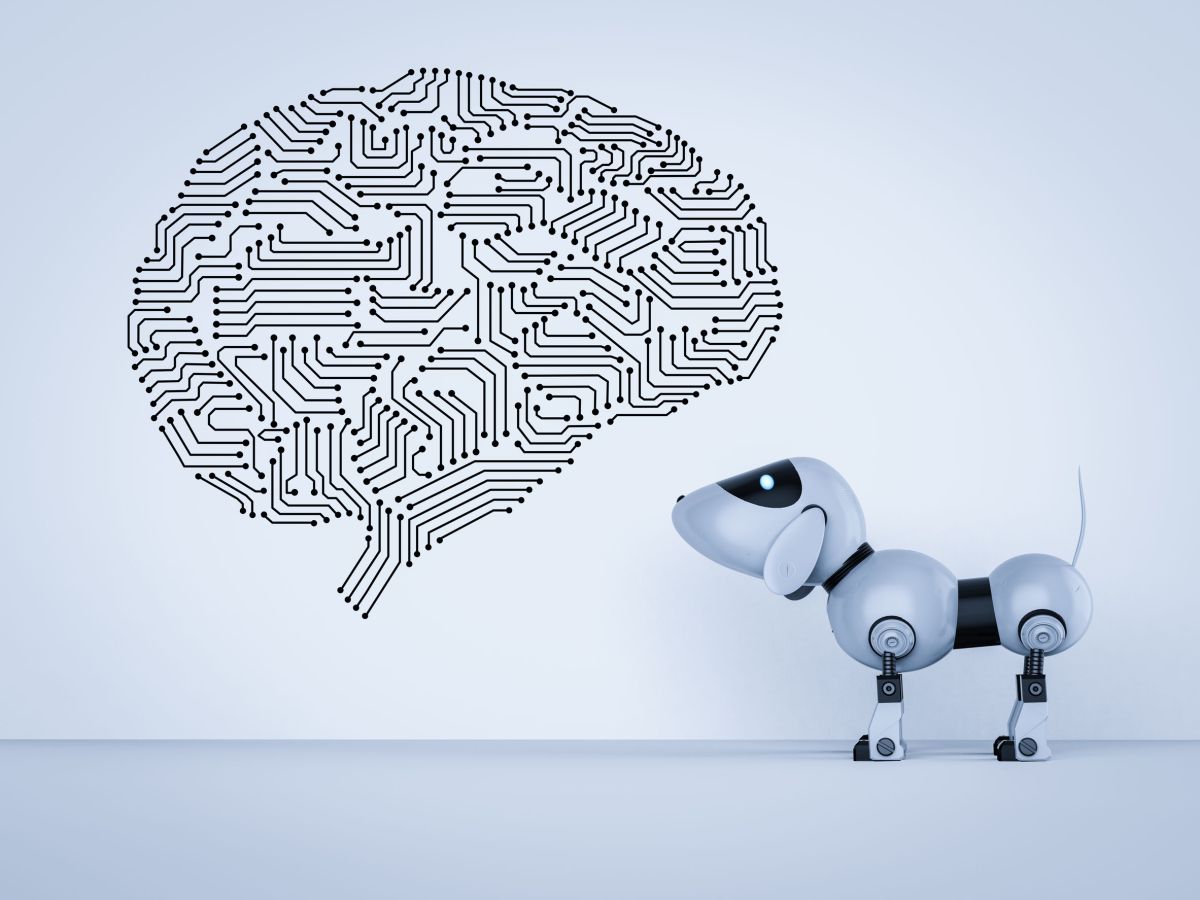
Image credit: robot dog by Kittipong Jirasukhanont via 123f.com

Fred, chocolate & tan english cocker spaniel pup, copyrighted image (C) Perfect cocker spaniel / Natalia Ashton

Re-activating happiness | Lost (& found) in translation

The day you learn that you have a reactive dog is also the day when you realise that you will now have to explain it to people around you.

And this is the moment when you can feel like an utter idiot. A very miserable and frustrated idiot who tries to converse with a brick wall.

It is true that people love dogs – and know about dogs. It is also very true that many people who call themselves dog lovers don’t actually understand dogs that well. They see a wagging tail and assume that the dog is “nice”… They see a dog who isn’t sure about approaching them and decide that “something is wrong” with that pup or worse – still insist on reaching out to stroke him, often without even asking you first.

If they see a dog who isn’t comfortable about physical contact with strangers, barks at other dogs or reacts in any other way that is not considered “normal”, people label your dog “naughty” or “aggressive”.

There are also people who let their unleashed dog run towards your pup on a lead because their dog is “friendly”. They either ignore your polite requests to put the dog on a lead or end up yelling…

Normally, none of these events would affect us much. They happen and they pass without making any particular impact on my life. However, this time every single occasion could make an impact on my little boy, so I had to do something to prevent them.

First things first, we changed our walks schedule and locations to avoid any unpleasant dogs.

Secondly, I started working with Fred on feeling relaxed and comfortable when we do end up bumping into other dogs. And since this part required certain exercises, setting up safe (threshold) distance to desensitise him, I had to occasionally walk away from people we knew. Upsetting them was most definitely not in my rule book.

They all loved and knew my boys, many had dogs, but not all of them understood reactivity or Fred’s emotions, so I decided to become my pup’s interpreter.

I went and spoke to everyone I cared about. If I couldn’t talk to people, I’d leave a card with a story, explanation and “I am so sorry” message.

In other words, I became Fred’s interpreter.

And even though some people still didn’t quite get it, others showed me support and encouragement and did their best to help if they saw us walking down the street. Some cheered me up (very quietly and gently) whenever they noticed any improvements – and it meant the world!

Not only it helped Fred to chill and relax, it made me more comfortable and relaxed, too. It suddenly felt like we were getting somewhere, making progress… re-activating happiness.

Together.


Photo source: Fred photographed by me