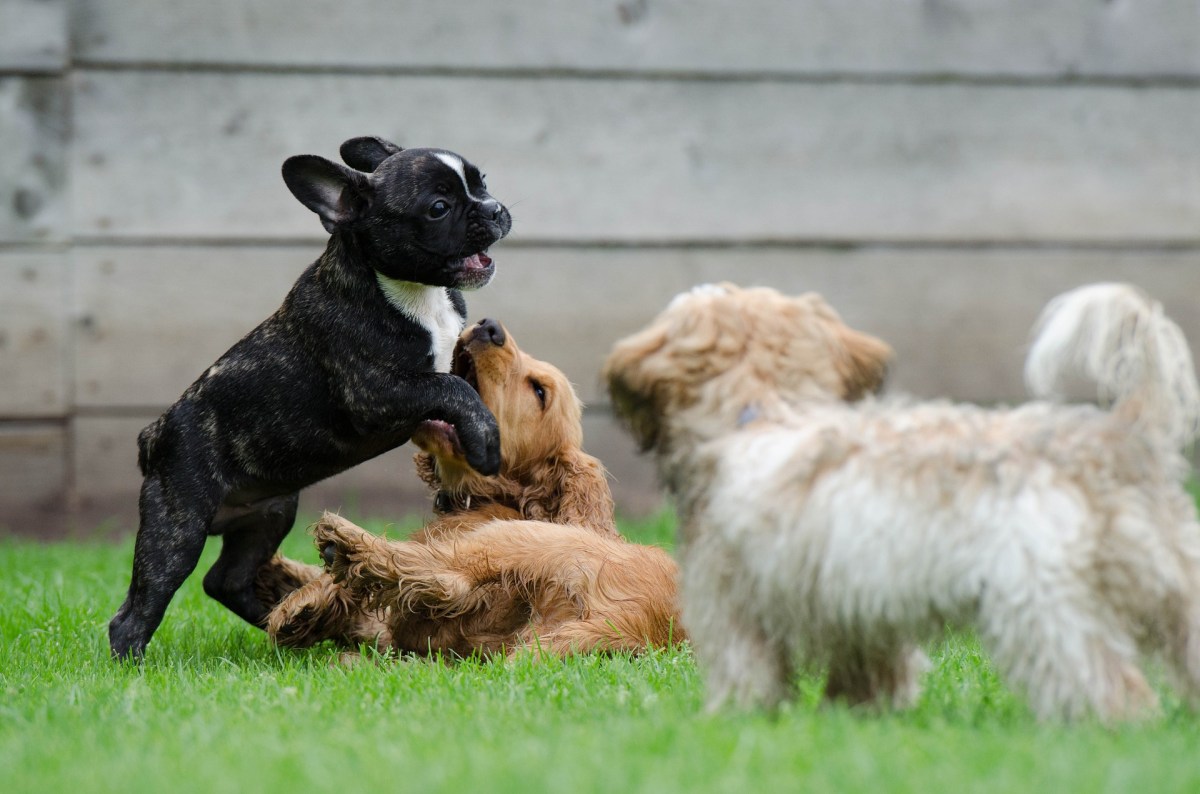
Can an English cocker spaniel be aggressive? Of course! But does it mean that a sweet puppy you just picked up is going to viciously attack you at every given opportunity? Not at all.
Let me put it simply.
Any dog, absolutely any dog, cocker or not, can react. Just like any living being, you and me included. We have our off-days and moments when something or somebody scares, frustrates or annoys us. Do we just “smile and wave”? No, we don’t. Which makes us pretty similar to dogs. Yet, dogs are still kinder, I’d say. They bite without breaking hearts. Humans, on the other hand, can come up with all sorts of cruel outcomes.
So let’s focus on our dogs and English cockers today and discuss the subject of sudden and no so sudden aggression these dogs can exhibit.
First of all, the forever hot topic that I simply must include in this post – the Rage Syndrome.
Cockers are said to be one of the breeds know to have a tendency for this trait. In short, the affected dog is said to suddenly become aggressive towards his owners, bite hard without warning, often have a change in facial expression and eyes, and then stop as if falling out of some uncontrollable state. It has never really been scientifically proven, but solids (reds and golden cockers, in particular) were said to suffer from it.
There were a few studies that looked at aggression in English cocker spaniels, however.
The one from 1996 was conducted by the Kennel Club and involved two thousand ECS owners chosen at random. The 1008 responded (and 932 were found to be suitable) by completing a questionnaire that included information about age, gender, neuter status, and coat colour. The owners were also asked to use a 1-5 scale to indicate whether or not their dogs ever showed aggression towards various stimuli including…
… aggression towards other dogs (1)
… aggression towards strangers approaching the dog (2)
… aggression towards visitors (3)
… aggression towards people approaching the owner when out and about (4)
… aggression towards children in the household (5)
… aggression towards other dogs in the household (6)
… aggression towards owner showing attention to other person or animal (7)
… aggression towards the owner or family member (8)
… aggression when disciplined (9)
… aggression when reached for or handled (10)
… aggression in restricted spaces (11)
… aggression at meal times / defending food (12)
… aggression without apparent reason (13)
The results of the researched showed that…
… solid cockers showed aggression in 2-13 situations and red/golden spaniels were more likely to be aggressive in situations 1, 4, 5, 7-13 compared to black cockers;
… males were more likely to react when with other dogs, towards their owner, when disciplined and when reached for or handled;
… females were more likely to become aggressive towards other dogs in the household, and neutered females were more likely to become aggressive towards children in the household;
While “the rage syndrome” was one of the main reasons for the research, the study could not determine whether or not it truly existed or was just a combination of genetic and neuroendocrine factors. It did however highlight two very important points:
… “neutering was not found to be useful as a preventative measure for aggression”
..and…
… aggression was always a result of a stimulus.
Even though the paper did not describe nor specify any conditions the dogs were raised and housed, whether or not they were socialised and trained, if they were free or lead- or barrier -constrained when meeting strangers or other dogs, and how the children approached these dogs or what kind of “discipline” was used, it made it absolutely clear – none of these English cocker spaniels acted out of nothing…
To explain my scepticism towards the missing information situation by situation from 1 to 12, I need to mention that dogs naturally…
… (1) may feel growly towards other dogs, especially when the other dog approaches in a certain manner, the cocker is restrained and have no means of avoiding the situation, or the cocker is suffering from fear-related reactivity;
… (2) do not enjoy being approached by strangers, especially when strangers start reaching out trying to touch the dog – it is the dog who should be allowed to approach a stranger if and when he is comfortable to do so, not the other way around;
… (3) see visitors as intruders unless this habit is eliminated through positive training during puppy socialisation weeks;
… (4) are suspicious of strangers approaching the dog’s owner unless the dogs are properly socialised or counter-conditioned out of the “habit”; They may also feel uneasy about anyone moving at unsteady pace (think, drunk people, for example) or carrying objects;
… (5) do not attack children unless provoked through acts of affection (which can be annoying and frustrating for the dog unless he is fully awake and prepared for it), high pitched noises, fast movement and running (dogs see these as an invitation to chase and catch), actions that dogs simply wouldn’t tolerate (think how many parents would insist of taking a photo of the dog next to a child or a child hugging the dog or, worse, sitting or lying on top of the dog) – several studies (1, 2, 3) ) concluded that young children, especially boys, were likely to be bitten by dogs, but none of them had details on the causes of the bites as those were never discussed with the families;
… (6) take time to accept other dogs in their household, especially when one dog is older than the other or they are of the same gender, or one of the dogs suffers from illnesses that leaves him in pain or discomfort, so unless the owner knows how to introduce and manage these dogs, they can end up fighting;
… (7) feel insecure (especially at young age) when the owner shows affection towards other animals or dogs, however cockers can be jealous at times and react;
… (8) avoid getting into any situation when they’d attact the owner, so there are a lot of reasons that may push the dog over the threshold – and these were not mentioned here; according to another study, cockers often showed “impulse aggression towards owners”, which can often be a result of spoiling the dog and allowing him to do anything he pleases instead of teaching him respectful behaviour (with Deference protocol as a reference source); a 2017 study highlighted that “spayed/neutered dogs were more aggressive towards owner”; and one more study showed that “nurture also influenced whether or not a dog was aggressive; the variance due to the sire heritability of aggression was only 0.2 (20%) whereas that due to the dam was 0.46 (46%) indicating a maternal-environmental effect”;
… (9) will not growl when disciplined unless the type of “discipline” involves a form of punishment, the dog learnt to associate the “discipline” with unpleasant outcomes or the dog is reactive as a result of fear or stress brough up by “discipline” methods, incorrect training, lack of socialisation, owner’s own emotional state, improper diet, pain, discomfort etc.;
… (10) do not like being “reached for” – it is the unwritten rule that you do not approach a dog, but let the dog approach you; additionally, dogs who are reactive, fearful, in pain, or startled when approached (say, they are losing hearing or were asleep when approached) are likely to snap, too;
… (11) like to have enough room for moving around (that’s why dogs find it extremely odd and stressful to walk at heel down a busy crowded street); a form of enclosure, barrier or anything that prevents their ability to escape danger should it be necessary, raises the dog’s stress levels and likely to lead to reactivity and “aggressive behaviour”;
… (12) do not share food or treats they are currently enjoying; they can be trained to know that there’s no harm at having your hand touch their bowl during dinner or spitting the horrible looking piece of street junk, but unless a dog is coached properly, with kindness and patience, from the very beginning, he will snap trying to protect his “treasure”.
But as long as it’s getting (for which I apologise – and would be happy to buy you a coffee should we ever meet to browse the blog together), this story is not going to be complete without a few further studies.
A fabulous 1997 study published in VetRecord by British Veterinary Association analysed behaviour of 285 owners of purebred English cockers to reveal that “the owners of high aggression dogs were significantly more likely to be tense, emotionally less stable, shy and undisciplined than owners of low aggression dogs” and owners of “low” aggression dogs were older and had strong bond with their cockers (Podberscek & Serpell, 1997), which we can now explain even more when combined with recent research about dogs mimicking their owners stress hormone levels and another peer-reviewed study that discussed impulsive aggression, “a trait more common in ECSs” and low levels of serotonin in dogs that exhibited such a behaviour.
Two more pieces of research that worth a mention is a 2010 study that looked into brain structure and development of aggressive and non-aggressive dogs (the cockers fell into the non-aggressive group) and another study from 2010 that looked into several genes found in ECSs to see if there is a link between canine aggression and dopamine- and serotonin-related genes defined previously. They discovered that four of the genes of the aggressive dogs had distorted haplotypes when compared to non-aggressive dogs.
And since I’ve already mentioned that neutered dogs were not essentially well-behaved following their surgery, look into the studies on neutering showing undesirable behavioural changes, increased aggression towards other dogs in castrated dogs, and owner-directed aggression in neutered springer spaniels.
Additionally, diet and environment play a vital role in developing of behaviour, too, and should not be overlooked. In fact, I think that, after genetics, diet is the most vital element since the body develops from and depends on the nutrients, so the deficiency or excess of some can make a huge impact on the behaviour.
How can you ensure that your cocker spaniel is not the aggressive type? Well, in reality, you cannot have an insurance for that… Instead you can…
… get a puppy from the KC-assured breeder;
… see puppy parents;
… see the way a puppy behaves;
… feed your spaniel a balanced complete diet;
… socialise and train your dog;
… protect your young puppy from excessive exposure to emotional and physical stimuli, positive or negative, and allow him plenty of rest;
… teach young children how to handle a puppy correctly;
… don’t neuter your dog to “fix” his behaviour;
… train using positive methods, not devices or punishment;
… be calm no matter what or as much as possible;
… love your dog unconditionally.


 PERFECT COCKER SPANIEL