Why train your dog / cocker spaniel training explained / Perfect cocker spaniel book & pet blog / dog diet, nutrition, grooming, training, health tips / (C) Natalia Ashton

What is the point of training a cocker spaniel?

Once upon a time I knew a cocker spaniel. He was a wonderful guy, a perfect specimen in every way – kind, friendly, and absolutely stunning. He was also incredibly well-trained and obedient. In any dog parent’s eyes he was a dream!

And then one day we saw a different side of this perfection. We were having one of our walks, somewhat crazy, somewhat calm, and most definitely a happy “messy-hair-don-t-care” walk for the three of us to enjoy. Suddenly, that spaniel appeared out of nowhere. He was running down the street, unleashed and free. I felt worried. We were on a side of busy road. We stopped. I looked around for his owner.

Eventually he appeared, slightly red faced. He called the dog – and the dog obliged to perfection. He went over, sat nicely and waited. A scene that would have been absolutely beautiful to watch if it wasn’t for one simple fact… The boy’s body language…

As he sat there, his body got tensed, the forever wagging tail – tucked under the bottom, and the ears pinned tights against his head.

Yes, the spaniel did what was asked of him… but he did so not because it was unthinkable for him not to please his owner out of love – it was unthinkable for him not to please his owner out of fear. He was perfectly obedient, but from that moment on I wouldn’t dare let my mind think of the methods used to train that dog. Even though he was perfect in comparison to my lot, I’d be heartbroken if my boys reacted to me and our training like that.

And we do take our training seriously (well, as serious as one can do when surrounded by cocker spaniels!) Anyone who knows me, read my blog or book, is aware of the fact that we love a bit of training here. I train my dogs from puppyhood and throughout their whole life without hardly missing a day. But we train for as long as everyone is enjoying it because for me, the point of successful training is far beyond a basic response to the cue word achieved at all costs or being able to perform every single imaginable task out there.

So why do we train our dogs then?

It helps the dog to live with his human family in harmony. We are all unique and have our own ways and habits, which the dog needs to be aware of. Teaching him what’s ok and not is like teaching a little child that sticking his fingers in an electric socket or playing with matches isn’t a good idea, but putting his toys away or kissing his mum really-really is.

As far as your household is concerned, you are the one who sets the rules as long as they are safe and sensible for everyone. If you are comfortable with your dog sleeping on a sofa – so be it. If you’d rather he slept in his own bed – teach him. If you want to avoid accidents and destructions during puppyhood – prevent them by proofing the house. Not keen on your dog stealing food from the table – don’t leave it there! If you absolutely have to have your dog jumping up when you come home, it’s your decision. But if you’d rather your dog politely sat by the door – it’s another lesson to learn.

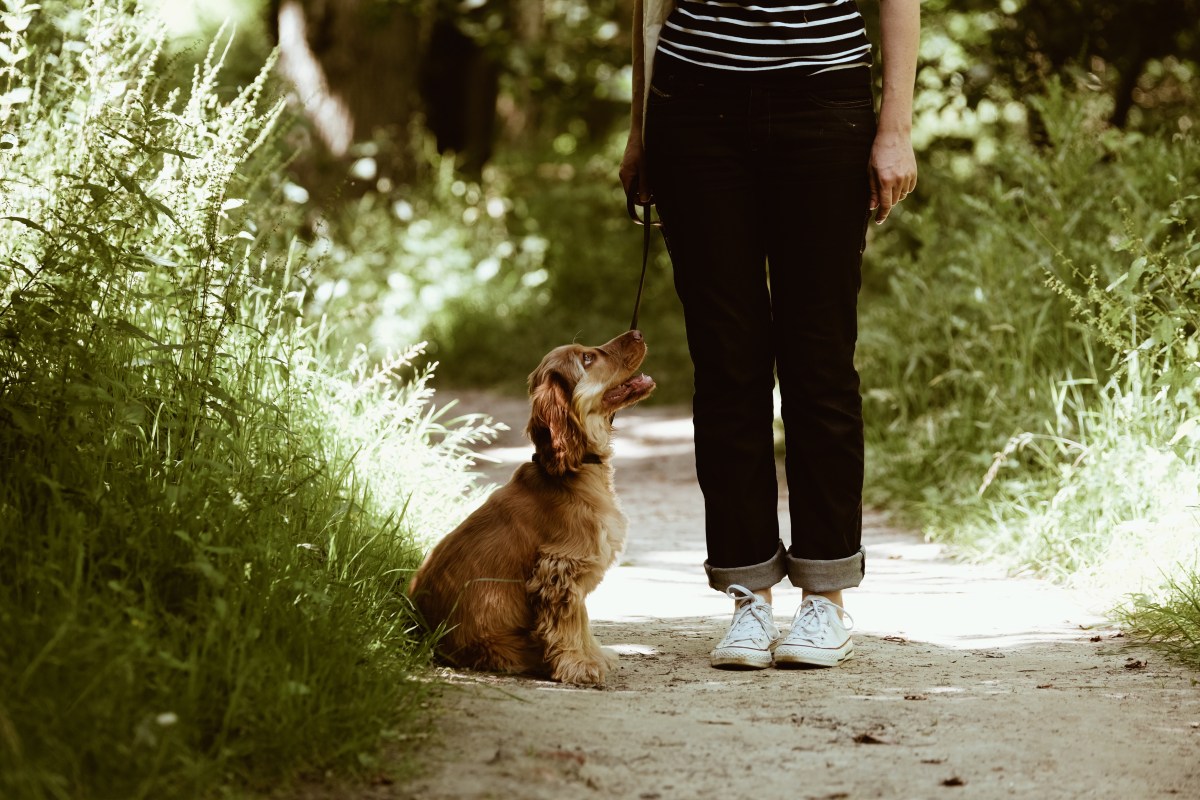
It keeps the dog safe and welcomed within the community. Teaching your spaniel recall will ensure that he won’t run away chasing birds, live stock, a little kid or a fearful dog. Asking him to walk next to you down the street means that people around you will feel comfortable. A dog who knows how to stop or come back is less likely to run under the car if he gets distracted. And any spaniel who can resist picking up garbage on the street or spit anything he did pick, won’t have a bad tummy accident or worse…

It’s a way to instil your cocker spaniel with confidence. The more your dog learns, knows, observes and experiences, the more confident he will be. Positive training doesn’t make the dog smarter (all dogs are smart, it’s a matter of perception, not comparison) – it works with his cognition, enhances his intelligence and improves problem-solving skills.

It helps your dog be more dog. Cockers are workers. These dogs need to get busy before they can eventually relax on a sofa feeling utterly satisfied. Even if they are show dogs and look like total divas. They still appreciate something more labour-intensive than a blow-dry.

It builds a human-spaniel bond. Training together creates many moments of fun (and sometimes frustration – but then they become fun, too), and helps you tune into each other’s behaviour, habits and signs that will strengthen your relationship. Throw in an endless supply of treats to please the brain all the way from the gut – and you will conquer the heart of your spaniel forever.

It makes you a better human. Training can change your priorities, unearth some feelings and traits you thought you didn’t have – and get rid of the emotional junk that’s not worth drugging around. It teaches patience. It encourages you to learn, too. It gets you to the point when you see your dog through a completely different set of spectacles – and fall in love with your pooch all over again, day after day, more and more.  You know, it turns you into a person your dog always thought you were.


Image credit: Me and Coop photographed by my husband once upon a time


Cooper, red sable english cocker spaniel puppy 6 months old, Perfect cocker spaniel book guide, grooming, training / Adolescent phase in puppies / Puppies go through teenage phase / Behaviour research / Dog blog (C) Natalia Ashton

Teenage troubles? New insights into your pup’s adolescent phase.

“The little rebel has blossomed! Every day is Independence Day!…” I wrote in my book while talking about raising a 6-month old cocker spaniel who was just about to hit the adolescent phase.

Do dogs really go through a teenage stage? They do, indeed. Right after they just got over the teething, the pups give their parents hardly any break before returning in a manner of a hormone-powered comet… or a little beastie, as I refer to mine.

The little fireball once, and now vaguely, remembered as the fluffy angel suddenly develops selective hearing and tantrums, and worst of all, seems to forget every command he learnt in the past few months.

“He is not listening to me!”

“She just run away and refused to come back and I ended up running around calling her like an idiot!”

“They seem to be doing their own thing on walks now… like I don’t exist…”

“All our training seemed to have gone down the drain!”

“How long this teenage stage last in dogs?”

Sounds familiar? I can almost see you node because it’s that “wonderful time of puppy parenthood” we all get to experience. Just like human teenagers, the young pups arrive at the adolescent phase of their life and simply can’t help but act up in a very unruly manner… Of course, it can be frustrating for both parties. The pup parents may feel that they failed as caring guardians and the pups experience such a surge of physiological and emotional changes they can barely deal with them all…

Fortunately, the rebelling phase passes relatively quickly making every parent experience the euphoria that Nietzsche perfectly summed up as “what doesn’t kill me, makes me stronger” once it’s over…

But despite it’s predictability and everything we already know about dogs, it is always interesting to hear new insights into canine behaviour because, in my opinion, it can help some people remain more tolerable and understanding when dealing with a growing pup and strengthen the canine-human bond when most needed.

The new study recently published by the Royal Society in the May 2020 issue of Biology Letters looked into the relationship between adolescent dogs and their human parents and came up with some very curious results.

According to the research, the dogs with stronger attachment to their owners experienced an earlier onset of the adolescent stage when compared to ones showing more independent and detached behaviour.

When it came to training, the pre-adolescent pups were happy to listen and perform commands given by their owners and trainers, however, their reaction and attention changed dramatically once they moved into the adolescent phase.

Unlike their younger self, the teenagers showed much higher odds of disobedience when given voice cues by their human parents. This was particularly obvious in dogs who experienced anxiety when separated from their owners. Yet, interestingly, the same dogs behaved a little better when working with a stranger or a trainer (which made me think of all the parents home-schooling their teenagers during the lockdown and praising teachers who seemed to be a lot more in control…). The latter didn’t depend on the skills level of the person in charge but rather the attachment between the dog and his owner.

Once the peak of adolescent stage was over (the dogs used in the study were 5, 8 and 12 months old), the level of trainability in pups improved naturally, without aids or force.

Even though the subject can and should be studied further, I see this study as a valuable reminder for all pup parents and trainers about paying particular attention and care to raising an adolescent puppy, especially a cocker spaniel puppy who is not only extra sensitive but prone to separation-related issues.

The teenage rebellion always passes, so it is up to us to guide the little cocker spaniel through this phase with positive training and a wagon-full of patience – and never base our parenting and training decisions on moments of frustration and despair.


Image credit: Cooper photographed by me

How to stop puppy mouthing and biting / tips and training for English cocker spaniel puppy / dog blog / puppy training / Perfect cocker spaniel (C) Natalia Ashton

Q&A | Ouch, it hurts! Or how to stop puppy biting

Do you remember the day you brought your puppy home? It’s always so sweet, isn’t it? The cuddly, silky, chunky, adorable puppy napping in his basket and carefully yet curiously sniffing his new home… But give him a few days and the little beastie is here to transform the “aww” moments into the “ouch!” ones more often then we’d ever imagined or wished for….

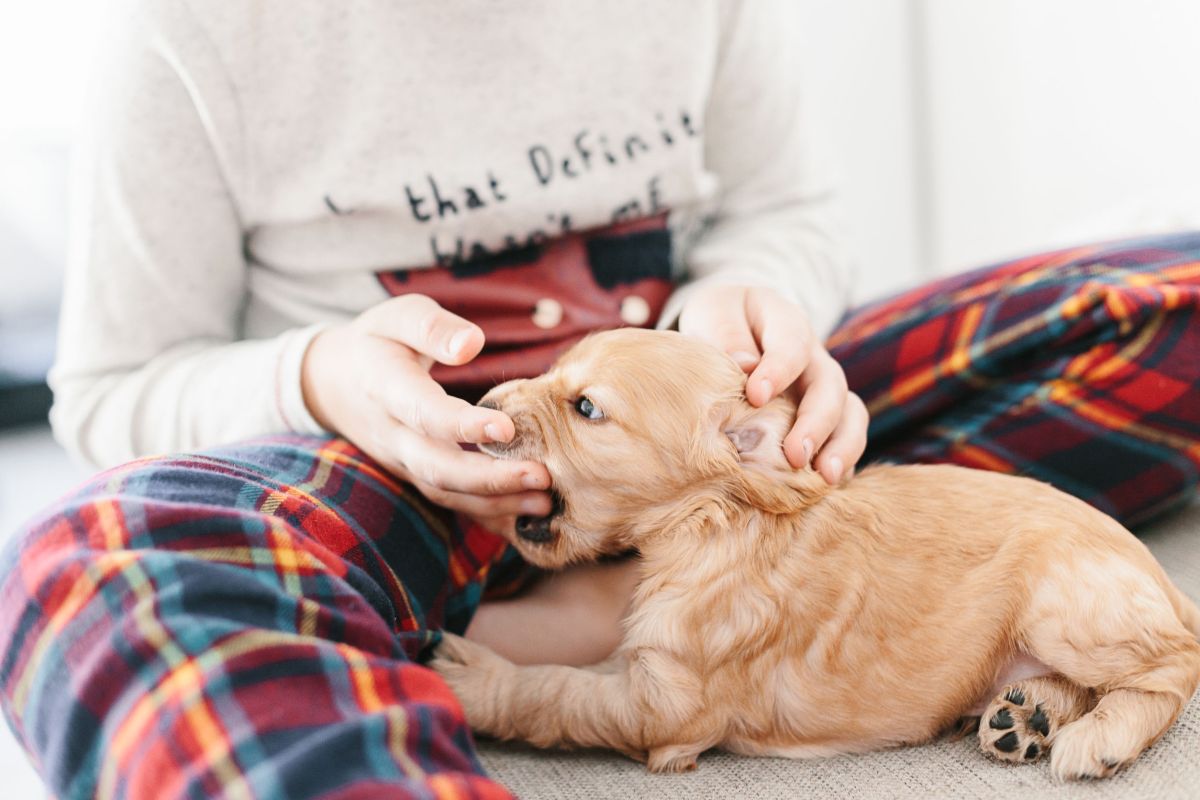
Puppy biting is one of the realities every dog parent has to deal with. It is a part of puppyhood. We cannot avoid it. Instead we have to face it, make it bearable and use as a starting learning point for our own benefit long-term. We also need to prevent the worst outcome that most people describe as aggression. On very positive side, it’s worth mentioning that cocker spaniels are one of the gun dog breeds that were used to flush and bring prey without killing it. As a result, these dogs are more likely to have a “soft bite” because of their genetic background, so your chances of achieving success are much higher than, say, for a parent of a terrier.

First of all, it’s important to establish the difference between puppy mouthing and puppy biting.

All puppies mouth as a part of their play with mum, siblings and anyone else who comes their way. Mouthing helps them to find their position within the family and explore the environment as a part of their learning process.

The best thing you can do is anticipate and avoid any situation when the hard mouthing or biting can happen. You need to understand your pup’s body language and pay a lot of attention to his behaviour 24/7, but once you get an idea – you will always know the how, when, what and why.

If the puppy is mouthing during a play, looking relaxed and happy, you can stroke him and immediately redirect his attention to a toy without making much fuss or encouraging a play to get puppy overexcited.

A chew or stuffed toy is a good choice because puppy can bite and lick it, which can help him relax and relieve possible teething discomfort. If your puppy is relatively calm, you can throw a ball for him to fetch – it will take his attention away from your hand, make him feel really good about learning a new command (so praise him when he brings the toy back) and relieve any possible teething discomfort by sinking his needle-sharp teeth into the trophy. Some puppies do well with soft toys or even old towers and t-shirt tied into oversized knots (big enough to be interesting and “bite’able”, but not too big or small because it needs to suit your puppy’s mouth)

If you sense a slightest tension in your pup’s body language, the puppy gets overexcited or the mouthing becomes painful, you have three options:

… hold the puppy firmly but gently, then carefully remove your hand out of his mouth with a “disappointing cue” such as “ops” or “uh-oh”. Personally, I don’t like the use of “no” because it’s a bit meaningless, and many of us end up using it way too often and pointlessly (from the dog’s point of view);

… you need to stop interacting with the pup, stand/sit still and avoid temptation to react, talk to or cuddle him;

… or you can do what his mum and other pups would – make a high pitch sound meaning that it hurts – and slowly and calmly walk away. It is important not to run away from the puppy or keep on screaming and run away in a manner of windmill with all your body parts moving and flopping around (which is what little kids often do)  because it will simply look like an irresistible game of chase, catch and bite!

You can also use the mouthing moment to let your dog know that it’s ok if your fingers are in or around his mouth. It will teach him that you can use fingers to examine his muzzle, inside and outside of his mouth, or clean teeth. It can be done as a part of a play when the puppy is in your lap, calm and content, and tries to have your finger in his mouth as a part of chill out time. It is up to you to decide when this “game” starts and ends.

Teaching your puppy the rules of mouthing and how to be gentle needs to begin from the day he first shows this behaviour. The longer you leave it, the worst it will become and the more difficult it will be to re-shape and stop. If you don’t act, the mouthing can signal the pup that it is totally ok to bite and eventually lead to serious consequences.

But puppies do bite, I hear you say. And yes, they do. The mouthing can become harder or turn into biting for several reasons.

Some puppies can use nipping and biting to seek attention or out of frustration because they aren’t getting what they want here and now. You need to stop this straight away and only react to the puppy if/when he stops, sits quietly and remains in a sitting position for a few seconds (you can build up from 5 to 30 seconds slowly). If he impolitely insists on rough play and biting because you are not paying attention or delivering treats and toys in a timely manner suggested by his royal highness – walk away calmly without saying a word.

Most puppies turn into little sharks during teething times because they really want to get those milk teeth out and because their gums really hurt. Giving him chew toys (I always choose rubber over nylon), soft unstuffed or extra strong toys, rope toys (make sure they are made of natural un-dyed cotton, ideally organic and always supervise!), suede toys, knotted towels and t-shirts in plentiful amounts can help a lot. Many puppies love destroying cardboard boxes, too. Stock up on toys like a kleptomaniac – and rotate them every few days to keep the pup interested. Don’t forget, once the puppy teeth are out, the grown-up set and gums still take time to settle, so don’t expect your junior to act as a responsible adult – he isn’t quite there yet. So toys and more toys, plus careful training are your allies.

A lot of puppies can also become nippy and aggressive when they are either overexcited or tired (puppies cry – puppies bite). I’ve written about it before, so Zoomies are so last year is the post for you.

Biting can also be your pup’s answer to fear or any moment or situation that makes him feel uncomfortable. Use socialisation, training and create calm environment to show him that life is generally pretty good, especially when you are a little cocker.

It is also important to remember to be gentle with the pup because he is very fragile and can be easily injured, not to shout him, or lock him in a spare room or crate as a way to punish him, work as a family involving everyone who ever plays with the little one, and most definitely teach your children the do’s and don’t’s of handling a young dog.

This stage will be over before you even realise. It just takes a little dedication and lots of patience to get through.

If you are looking for more information about English cockers and finding and raising a puppy, you may like my book Perfect cocker spaniel, which has a month by month puppy plan nestled nicely among the tips about breed, health, grooming, first aid, diet and training.


Image credit: cocker spaniel puppy by Switlana Symonenko (C) 123rf.com