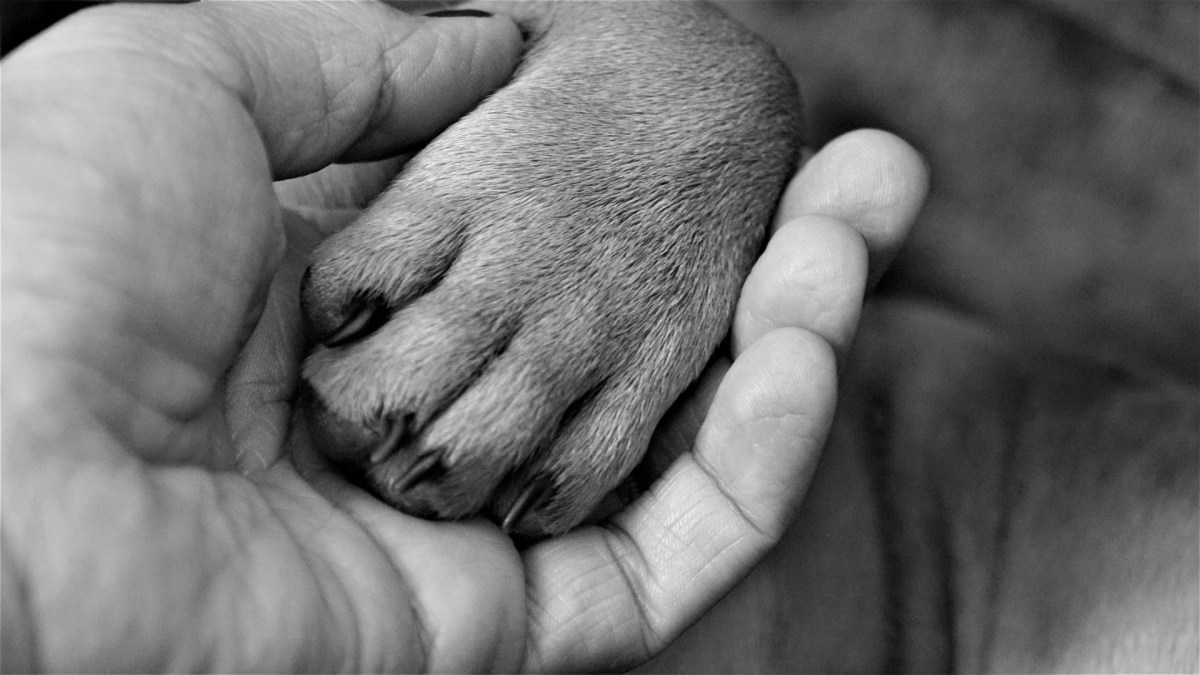
Simple way to keep dogs live longer, healthy and happy life / study on dogs obesity and lifespan / Perfect cocker spaniel / Dog blog, english cocker spaniel tips, advice, grooming, training / canine nutrition, dog diet, dog nutritionist uk / (C) Natalia Ashton

The most simple way to keep your dog live for longer

Some time ago I read a story about selective breeding and Pekinese dogs in ancient China. The Lion-like dogs were considered sacred and protected by the Manchu emperors who not only exclusively owned the dogs, but kept a watchful eye on their breeding quantities and qualities.

Thus the Pekinese were bred for both form and function ensuring that their exquisite beauty, intelligence and character would not be achieved by sacrificing their physical well-being.

As a result, even though the little dogs still had their short muzzles (known as brachycephaly), they were said to remain active and disease-free for their entire lives that often spanned a quarter of a century.

I sat there thinking how wonderful it would be to share 25 years of my life with my dogs. The life without disease or heartaches. Of course, it’s more of a dream than reality, but there are some realistic ways to ensure that our pups stay with us for longer. Including the most basic and straightforward one…

In 2019 Journal of Veterinary Medicine published a North American study that looked into the lifespan of 12 breeders of pet dogs aged between 6.5 and 8.5 years old and identified as either “overweight” or “normal” based on the Body Conditioning Chart.

The results of the study showed that the overweight group of dogs had a shorter lifespan compared to the “normal” group of the same breed. The difference ranged between 6 months and 2.5 years, and the smaller breeds seemed to be more affected than larger ones.

The study had its flaws because the data was collected from a great number of vets working in 900 veterinary hospitals across the country, there was no specified medical history that could have affected dog’s health, the comparison chart for the maximum age was based on generic breed information, and all dogs used for the study were neutered.

Having said that, the fact is that the dogs who carried extra kilos were at higher risk of earlier death than their slimmer counterparts is obvious.

For us, as dog parents, it means one simple rule – keeping our spaniels fit and lean means longer life together!

Cockers are prone to weight gain, so it is vital to monitor their diet (treats included!) and exercise to suit their age and physical requirements, keep them well to avoid the need for certain medications that can contribute to weight-gain as a side-effect, reconsider routine neutering, and most definitely consult a vet if you suspect any underlying conditions that may get your dog put on pounds. And if your spaniel already looks a little chubby, help them lose the pounds for good.

It really is such a small effort for achieving something pretty wonderful. And who knows maybe there will come a day when we and the pooches really do get to share a quarter of a century together again…

Children and dogs / how to introduce children to your puppy / how to teach children play with dogs / how to avoid dog biting children / first puppy advice cocker spaniel puppies / first published on Perfect cocker spaniel blog (C)

On happiness & falling in love

First of all, do you know there is a publication called Journal of Happiness Studies?! I am most definitely not making it up as a weekend joke. It’s a scientific magazine that dedicates its entire existence to researching psychology of happiness.

Last month they shared a new study about our relationship with dogs and how we, as human beings, benefit from it emotionally. Termed “pet effect”, our need to support our dogs can apparently not just make both parties feel good whilst engaging in caring activities. According to the study, dog parents experienced ‘greater closeness to the dog, beyond the contribution of receiving need support”, followed by a heightened and improved sense of well-being and long-term reduction of emotional stress. However, the study also specified that these positive changes only occurred in people who maintained a real connection and regularly engaged with their pets, perceived them as a part of their family, not treated the dogs simply as guardians or domesticated animals.

This theory blends nicely with the Stanton & Levin 1988 study I’ve been in love with for a while because it gave me a beautiful little insight into the subject of love… Not just any love, but the love that our dogs grow for us. The authors based their study on Pavlovian response and showed that dogs who were trained through positive methods, including affection and social interactions, naturally produced oxytocin towards the person who was engaged with them. In other words, they fell in love in the most harmonious and natural way.

So here we go… Every time we enjoy life together with our pups, play together or teach-learn new tricks, our own bodies get rid of stress and our dogs’ little hearts fill with affection towards us.

Things can’t get better than this…

Scientists discover new precise way to calculate dog's age in human years / new research in DNA methylation and genetics / how old is my dog in human years / Perfect cocker spaniel blog / breed and puppy guide, grooming tips, diet and nutrition, cocker spaniel puppy training / canine nutritionist, dog dietician, pet nutrition coach / (C) Natalia Ashton

Science discovers a more precise way to convert dog’s age into human equivalent

Remember being told that you can convert your dog’s age into human years by multiplying the former by 7?

Well, the latest research published in the Cell Systems magazine tells us that it’s not as straight forward and our dogs may, in fact, be older in human years than we previously thought…

This time the scientists took blood samples from 104 labs spanning a 16-year age range to follow the changes that occur within the dog’s DNA sequences over lifetime. They then compared them to 320 human samples taken from people aged between birth and 103.

The aim of the study wasn’t simply finding out the most perfect age conversion. Instead, the researched wanted to compare the changes that occur in dogs’ and humans’ genes as we age, see how these changes can be utilised to improve the quality of life, and learn whether or not “the methylome* can be used to quantitatively translate the age-related physiology experienced by one organism (i.e., a model species like dog) to the age at which physiology in a second organism is most similar (i.e., a second model or humans)”.

These changes tend to occur at certain milestones of our lives showing as new attachments of the DNA structure (called DNA methylation), thus allowing the researches to use the DNA and these alterations (also referred to as the “epigenetic clock”) as a reliable estimate of a person’s age.

The dogs were chosen for the study because they are the species we tend to share our lives, diet, chemical exposure and environment more than any other animals.

The highest similarities in sequence changes were noted in young dogs and young adults, as well as senior dogs and older people. The results of the analysis also showed that an 8-week old puppy is likely to be equal to a 9-month old baby, will be similar to a 31-year old by the time he turns one, and the 12-year old lab can be compared to a 70-year old adult. The adolescent stage was less predictable, possibly due to the fact that dogs have a shorter lifespan.

For me, another fascinating discovery was the dramatic age jump during the first year of dog’s life (from birth to being 31!) yet how the process slowed down once the dog celebrated his third birthday.

The geneticists did come with an algorithm for calculating the age, which was a bit more challenging than multiplying our dog’s age by 7.

human_age = 16 ln(dog_age) + 31

If you fancy doing it yourself, you first need to multiply your dog’s natural logarithm by 16, then add 31.

However, I did the maths for you to keep things simple…

Dog’s age = 1 years old / Human age = 31 years old

Dog’s age = 2 years old / Human age = 42.1 years old

Dog’s age = 3 years old / Human age = 48.6 years old

Dog’s age = 4 years old / Human age = 53.2 years old

Dog’s age = 5 years old / Human age = 56.8 years old

Dog’s age = 6 years old / Human age = 59.7 years old

Dog’s age = 7 years old / Human age = 62.1 years old

Dog’s age = 8 years old / Human age = 64.3 years old

Dog’s age = 9 years old / Human age = 66.2 years old

Dog’s age = 10 years old / Human age = 67.8 years old

Dog’s age = 11 years old / Human age = 69.4 years old

Dog’s age = 12 years old / Human age = 70.8 years old

Dog’s age = 13 years old / Human age = 72 years old

Dog’s age = 14 years old / Human age = 73.2 years old

Dog’s age = 15 years old / Human age = 74.3 years old

Dog’s age = 16 years old / Human age = 75.4 years old

So how old is your cocker in human years? I am still struggling to process the fact that Coop is already over 50 and my little Fred is same age as me, if not a bit older. Quite a shock to the system, mainly mine, of course.

* the activity within the DNA that changes during our lifetime


Photo source: image by athree23 from Pixabay