How to stop puppy mouthing and biting / tips and training for English cocker spaniel puppy / dog blog / puppy training / Perfect cocker spaniel (C) Natalia Ashton

Q&A | Ouch, it hurts! Or how to stop puppy biting

Do you remember the day you brought your puppy home? It’s always so sweet, isn’t it? The cuddly, silky, chunky, adorable puppy napping in his basket and carefully yet curiously sniffing his new home… But give him a few days and the little beastie is here to transform the “aww” moments into the “ouch!” ones more often then we’d ever imagined or wished for….

Puppy biting is one of the realities every dog parent has to deal with. It is a part of puppyhood. We cannot avoid it. Instead we have to face it, make it bearable and use as a starting learning point for our own benefit long-term. We also need to prevent the worst outcome that most people describe as aggression. On very positive side, it’s worth mentioning that cocker spaniels are one of the gun dog breeds that were used to flush and bring prey without killing it. As a result, these dogs are more likely to have a “soft bite” because of their genetic background, so your chances of achieving success are much higher than, say, for a parent of a terrier.

First of all, it’s important to establish the difference between puppy mouthing and puppy biting.

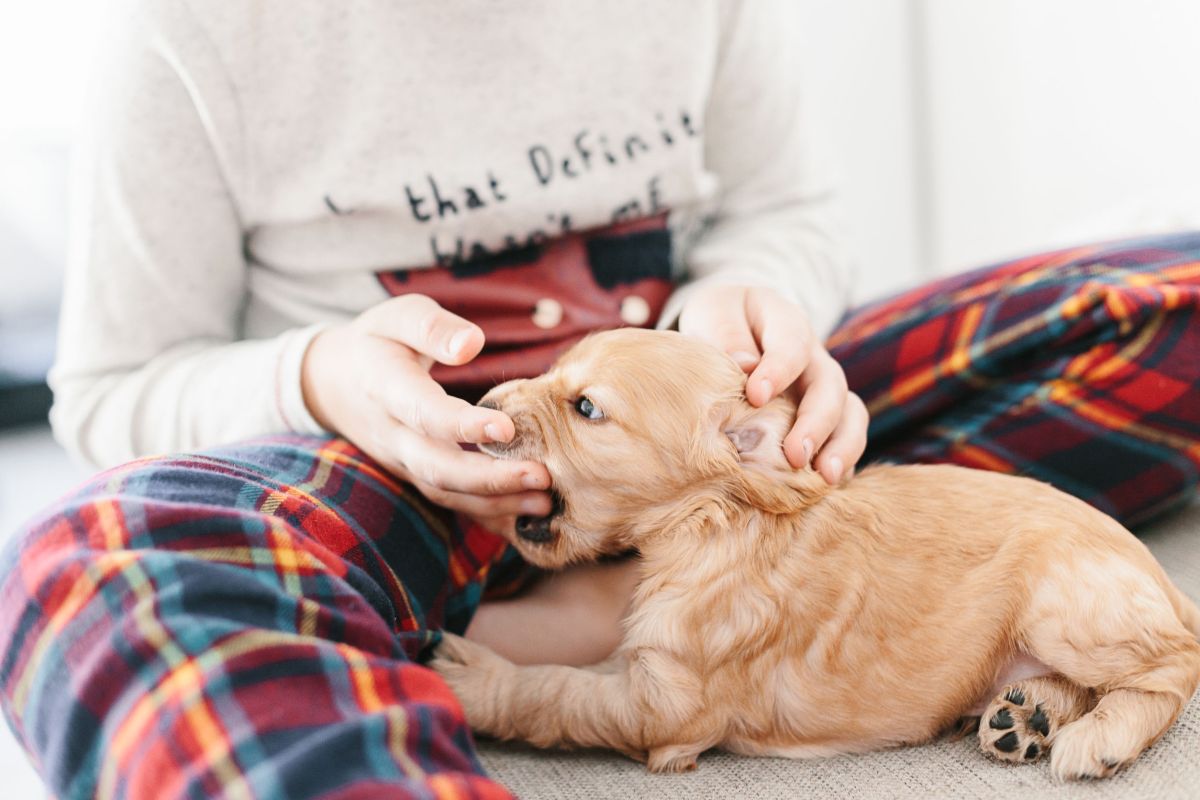
All puppies mouth as a part of their play with mum, siblings and anyone else who comes their way. Mouthing helps them to find their position within the family and explore the environment as a part of their learning process.

The best thing you can do is anticipate and avoid any situation when the hard mouthing or biting can happen. You need to understand your pup’s body language and pay a lot of attention to his behaviour 24/7, but once you get an idea – you will always know the how, when, what and why.

If the puppy is mouthing during a play, looking relaxed and happy, you can stroke him and immediately redirect his attention to a toy without making much fuss or encouraging a play to get puppy overexcited.

A chew or stuffed toy is a good choice because puppy can bite and lick it, which can help him relax and relieve possible teething discomfort. If your puppy is relatively calm, you can throw a ball for him to fetch – it will take his attention away from your hand, make him feel really good about learning a new command (so praise him when he brings the toy back) and relieve any possible teething discomfort by sinking his needle-sharp teeth into the trophy. Some puppies do well with soft toys or even old towers and t-shirt tied into oversized knots (big enough to be interesting and “bite’able”, but not too big or small because it needs to suit your puppy’s mouth)

If you sense a slightest tension in your pup’s body language, the puppy gets overexcited or the mouthing becomes painful, you have three options:

… hold the puppy firmly but gently, then carefully remove your hand out of his mouth with a “disappointing cue” such as “ops” or “uh-oh”. Personally, I don’t like the use of “no” because it’s a bit meaningless, and many of us end up using it way too often and pointlessly (from the dog’s point of view);

… you need to stop interacting with the pup, stand/sit still and avoid temptation to react, talk to or cuddle him;

… or you can do what his mum and other pups would – make a high pitch sound meaning that it hurts – and slowly and calmly walk away. It is important not to run away from the puppy or keep on screaming and run away in a manner of windmill with all your body parts moving and flopping around (which is what little kids often do)  because it will simply look like an irresistible game of chase, catch and bite!

You can also use the mouthing moment to let your dog know that it’s ok if your fingers are in or around his mouth. It will teach him that you can use fingers to examine his muzzle, inside and outside of his mouth, or clean teeth. It can be done as a part of a play when the puppy is in your lap, calm and content, and tries to have your finger in his mouth as a part of chill out time. It is up to you to decide when this “game” starts and ends.

Teaching your puppy the rules of mouthing and how to be gentle needs to begin from the day he first shows this behaviour. The longer you leave it, the worst it will become and the more difficult it will be to re-shape and stop. If you don’t act, the mouthing can signal the pup that it is totally ok to bite and eventually lead to serious consequences.

But puppies do bite, I hear you say. And yes, they do. The mouthing can become harder or turn into biting for several reasons.

Some puppies can use nipping and biting to seek attention or out of frustration because they aren’t getting what they want here and now. You need to stop this straight away and only react to the puppy if/when he stops, sits quietly and remains in a sitting position for a few seconds (you can build up from 5 to 30 seconds slowly). If he impolitely insists on rough play and biting because you are not paying attention or delivering treats and toys in a timely manner suggested by his royal highness – walk away calmly without saying a word.

Most puppies turn into little sharks during teething times because they really want to get those milk teeth out and because their gums really hurt. Giving him chew toys (I always choose rubber over nylon), soft unstuffed or extra strong toys, rope toys (make sure they are made of natural un-dyed cotton, ideally organic and always supervise!), suede toys, knotted towels and t-shirts in plentiful amounts can help a lot. Many puppies love destroying cardboard boxes, too. Stock up on toys like a kleptomaniac – and rotate them every few days to keep the pup interested. Don’t forget, once the puppy teeth are out, the grown-up set and gums still take time to settle, so don’t expect your junior to act as a responsible adult – he isn’t quite there yet. So toys and more toys, plus careful training are your allies.

A lot of puppies can also become nippy and aggressive when they are either overexcited or tired (puppies cry – puppies bite). I’ve written about it before, so Zoomies are so last year is the post for you.

Biting can also be your pup’s answer to fear or any moment or situation that makes him feel uncomfortable. Use socialisation, training and create calm environment to show him that life is generally pretty good, especially when you are a little cocker.

It is also important to remember to be gentle with the pup because he is very fragile and can be easily injured, not to shout him, or lock him in a spare room or crate as a way to punish him, work as a family involving everyone who ever plays with the little one, and most definitely teach your children the do’s and don’t’s of handling a young dog.

This stage will be over before you even realise. It just takes a little dedication and lots of patience to get through.

If you are looking for more information about English cockers and finding and raising a puppy, you may like my book Perfect cocker spaniel, which has a month by month puppy plan nestled nicely among the tips about breed, health, grooming, first aid, diet and training.


Image credit: cocker spaniel puppy by Switlana Symonenko (C) 123rf.com
Current BVA and RCVS guidelines and rules for veterinary care for dogs vaccinations, emergency treatments, appointments, medication, wormers, anti-flea treatments, how to take the dog to the vets during COVID19 / Perfect cocker spaniel pet blog / (C) Natalia Ashton

The Do’s & Don’t of veterinary care for your dog during COVID19 pandemic. All your questions answered.

On 27 March Niall Connell, president of the Royal College of Veterinary Surgeons (RCVS), the governing body for the veterinary profession in the UK, addresses his colleagues in a video message providing further guidelines for managing their practices and work during coronavirus pandemic and lockdown.

His message was clear. “The public safety must override the animal welfare”, Connell said with a heavy heart. This is the bitter truth of the current situation we are all in. This also means that the wellbeing and safety of our dogs, more than ever, is in our hands and our sole responsibility. Even though the veterinary practices can remain open, they have every right not to see anyone for routine enquiries, treatments or sale of a medication that is not essential for life.

To make it clear and simple to understand (and take the necessary pressure off the vets’ shoulders) I put together a list of questions covering all the Do’s and Don’t’s. It is based on the most recent guidelines and rules issued by the government, RCVS and BVA (British Veterinary Associations).

Will my veterinary practice be open?

The veterinary practices can remain open. This decision can be made by each individual business, so you will need to call and check. Under the government guidelines, the practice may reduce their working hours, limit the staff members available at the time, the number of clients they see and the ways they see them.

Can a vet see my dog?

The vets can see a limited number of patients to prevent the spread of coronavirus and reduce the risk of COVID19 infection among themselves, their families and clients. They may agree to travel to your home, but only if they deem this essential and risk-free. Many vets can see you and your dog via a video call.

You must always phone the practice before travelling to make further arrangements.

Can I get wormers, anti-flea treatments or vaccinations for my dog?

All these fall under “routine treatments” that are not associated with disease or deterioration, and according to the government guidelines “should not be carried out until further notice”.

If your dog has been seen by a vet in the last 6-12 months, has been given all clear, is in good health and has been on these medications without any side-effects, your vet may agree to either post them to you or issue a prescription that you can use to purchase these treatments online. Any online purchases are done at your own risk, so please double-check the name, dose, expiry date before you administer anything.

Can I use an alternative medication or something “natural” whilst I can’t have my usual ones?

No. Going down this route means that you will be playing a Russian roulette by giving your dog something that may cause a reaction or put his life at risk. Many natural treatments also contain ingredients that are toxic to dogs. None of them are tested to be effective. If anything happens to your dog as a result, you may not be able to take him to the vets immediately.

Are there any exceptions for vaccinations and boosters?

At the moment, any annual booster vaccinations are not urgent or essential. However, according to the BVA and RCVA guidelines “there may be scenarios where, in professional judgement, vaccines are being given to reduce a real and imminent risk of disease: this includes in the face of an animal disease outbreak, or in a scenario where a part of a vaccine course has been given and the animal may be exposed to the disease. 

In this case, veterinary judgement is paramount and the risk of leaving an incomplete course must be weighed against the ability to see the animal whilst maximising social distancing.

NB if the Government’s social distancing restrictions last longer than the current review date of 13 April, this guidance may change further.”

This means that your vet may agree to complete a vaccination protocol for your puppy if your puppy has already received the first part of his vaccine, or at high risk of disease due to being unvaccinated. However, do not expect or demand your vet to carry out this procedure as a mandatory treatment.

Bear in mind that if your adult dog has had his regular boosters, he is likely to have enough antibodies to remain safe against the core diseases for at least a few months after his booster is due. The only exception is leptospirosis, so if you live in an area known to be at risk for lepto, keep your dog at home.

Can I still get my repeat prescription for certain drugs?

Some practices will still dispense repeat prescriptions that are essential for the animal’s life. In this case, you will need to contact them in advance to arrange a safe handout or collection.

Although this is not ideal, your veterinary surgeon may agree to issue repeat prescription for any medicine categorised as POM-VPS, NFA-VPS, or AVM-GSL or advise on a suitable alternative. You will need to be registered with the practice, give your full consent, check and administer medication at your own risk, and contact to vet in any emergency situation associated with the treatment. Any vet holds the right to refuse to issue a repeat prescription or provide their client with certain drugs via remote means.

What treatments are classified as essential?

Any treatment that “essential to maintaining the future food supply chain” (which applies to farm animals, not dogs) can be carried out.

For dogs, the veterinary surgeon will only see them “in emergencies or where, in the judgement of the veterinary surgeon, urgent assessment and/or treatment is needed in order to reduce the risk patient deterioration to the point where it may become an emergency in the near future (i.e. within the three-week time frame currently laid out y the government for these measures)”.

What treatments are classified as an emergency?

These include any cases that would normally be seen out of hours or fitted in on the same day regardless of the scheduled appointments (poisoning, allergic reaction, injury, bleeding, loss of coordination, etc). According to BVA, such cases are “immediate threat to life; significant impact on health/welfare and high risk of deterioration of left unmanaged”

Any dog who is in stable condition but can deteriorate due to poor health or trauma, will also be seen.

What if my dog needs to be PTS?

In the current situation, this can be very heartbreaking because you will not be able to accompany your dog to the veterinary practice. Should the vet agree or must carry out euthanasia, he will be the only person who will stay with your dog.

What if my dog becomes unwell while I am self-isolating due to COVID19 infection or because I have symptoms of coronavirus?

Your dog will only be seen if his condition is classified as an emergency. If not, your vet is allowed to postpone the treatment until you either recover or come out of quarantine. The assessment of your dog can be done via video call.

If the dog is in need of an urgent care, the vet can weigh any possibilities of putting his own health, or health of anyone he’s in contact with, at risk before arranging an appointment. Should he decide to go ahead, you will need to find a healthy asymptomatic person to take your dog to the surgery followed by necessary precautions to keep everyone safe.

What steps do I need to follow if I have to take my dog to the veterinary practice?

Not every veterinary practice will provide face-to-face appointments. Most have now issued a letter either via their official website, social media or post to inform their clients. Do your best to find this information before calling.

If you need an appointment or have a question – email for anything that is not urgent or call for any emergencies.

Most vets now ask that the dog is brought to the practice by one person (meaning your other half must stay at home and you need to ensure that your dog travels safely).

Call the practice from the car park upon arrival. Check if they have their own lead and collar, or slip lead. Remove your own lead if they ask you to do so.

Practise social distancing to ensure that you and the member of staff remain two meters apart.

Pay by card, over the phone or via bank transfer. Do not rely on cash or cheques.

Agree on further arrangements of whether you can wait for your dog in the car park or need to return to the practice in a few hours.

When you bring your dog home: wash your hands, wash your dog thoroughly whenever possible, follow with a blow dry, disinfect your car, dog’s collar/lead and bedding.

What else can I do to protect my dog?

To keep everyone’s safe and sane, only take your dog out if it is absolutely essential. Most dogs, including cocker spaniels, can be content at home as long as they have an access to the garden.

If you do need to take your dog out, always wash his paws after each walk, never let him off the lead to avoid any situations when your spaniel can get attacked, run off, injure himself or potentially find and eat something toxic.

Do not take your dog to your relatives as this can increase the risk of viral spread (either via air or surfaces or your dog’s coat) and can make you ill and unable to care for your dog.

Stay at home! Remember that no dog ever died if he hasn’t had walks for a few weeks. Some may get bored, but it’s better to have a bored and healthy pooch than risk his and yours lives.


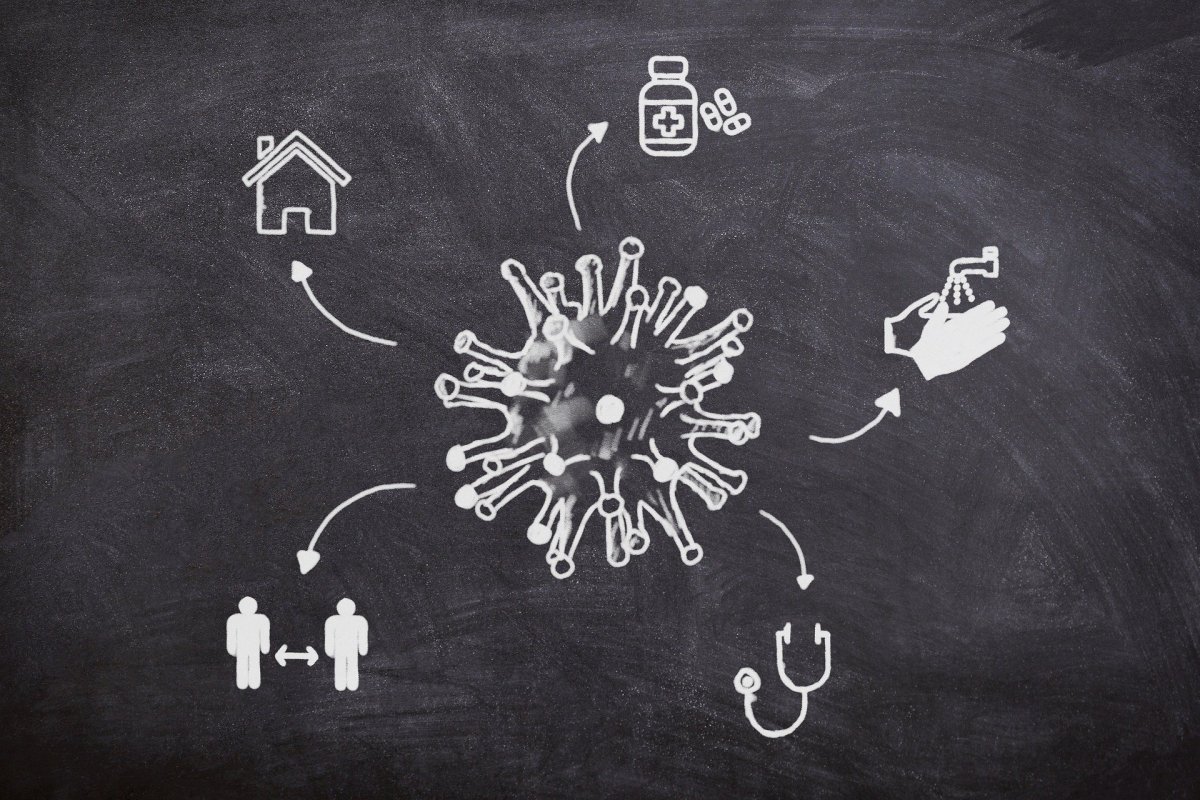
Image source: athree23 from Pixabay

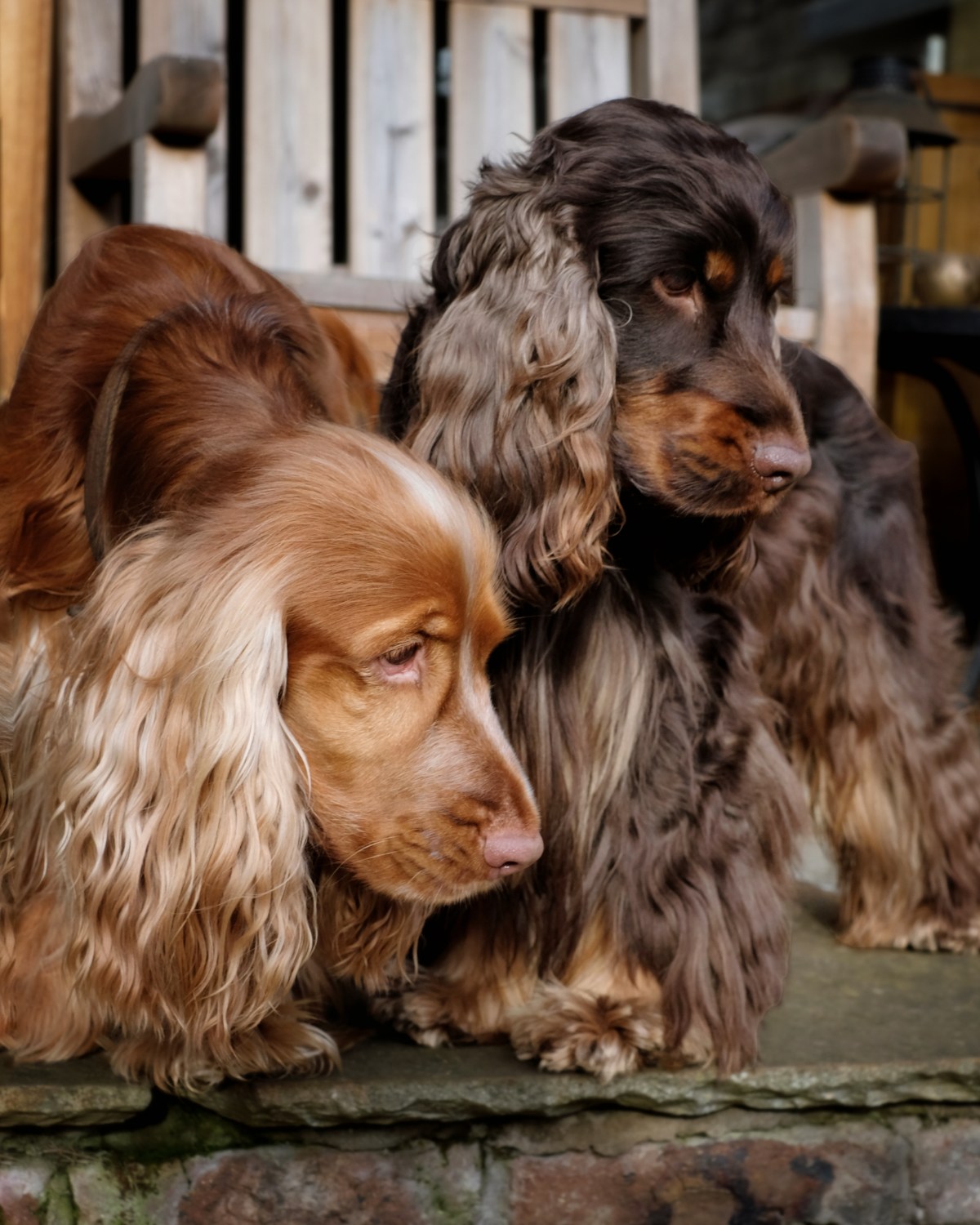
Covid coronavirus pandemic lockdown / self-isolating tips with dogs / english cocker spaniel advice, grooming, training, mental stimulation tips / Perfect cocker spaniel book and pet blog / Cooper, Fred, Natalia Ashton (C)

Self-isolating with two dogs | Week 1

“We are always getting ready to live but never living…” Ralph Waldo Emerson

How much can things change in a blink?… Alright, this blink was a slow-motion kind of blink, but nevertheless, it felt like all the time suddenly squeezed into a short, brief moment of fear, helplessness and anxiety. Then exploded and sharply divided the entire course of life into the past and the future that will never be the same, as planned or whatever it’s going to turn out to be like… The “never make plans” joke suddenly became the new motto. At least, that’s how I felt.

And then… then I had my boys. The reason to carry on and smile. I honestly have no idea how I’d be without them.

So… we are self-isolating. The four of us. Two humans and two dogs. 24/7. It feels like we could enjoy the time together, yet the stress and the news make it ash’y and grim at times. A bit like Christmas post apocalypse.

The boys have been amazing, to be honest. I was, of course, concerned about them and the absence of walks. I took them out a couple of times, but then some cyclists stopped by too close to us and I ended up so anxious, I couldn’t breathe. At the end, I simply knew that I could manage the pups at home, and it would most likely be quite good for Fred to reduce the stimuli for a bit.

Our first week went better than I imagined. I made sure to stick to the boy’s usual schedule sans walk, which got replaced with play time and training sessions. A bit like living through days when the weather was too bad for proper walks.

We get up. Coop and Fred have their breakfast, use the garden and relax for an hour.

The walk would be next, but since we are at home, we either pop out to the garden (so grateful to have this little green space!) or stay in the living room with a garden door open for some fresh air. The hour is then dedicated to training or games. I have a few different plans for the boys, so one day we learn new tricks, next morning could be dedicated to puzzle toys or food searching games, then – calming exercises and training, and so on.

Fred usually likes to finish these sessions with a quick ball game while Coop prefers to relax on sunny spot and watch how the chocolate fury and I make complete fools of ourselves.

Then they help me with the chores, fall sleep, and I write or study until lunch.

At lunch the boys get some licki mats and garden play time.

Then we have one more training session in the afternoon. This one is usually dedicated to “faux agility” as I named it. Or we trick train.

A bit more studying, house work and writing for me – and nap time for them until dinner.

In the evening we eat, relax, watch tv. The boys have another nap. Then we do a bit of grooming and spend some time in the garden.

Come late evening, the two are usually napping next to my desk, to I can continue with my course work or spend a little time on social media and reading the news. And I watch The Durrels and some old movies… My reverie.

And then we all go to bed…

I know it’s not very eventful, but for now it’ll do… It’s safe and it keeps others safe, too.

How have you been? 


Image credit: Cooper & Fred photographed by me