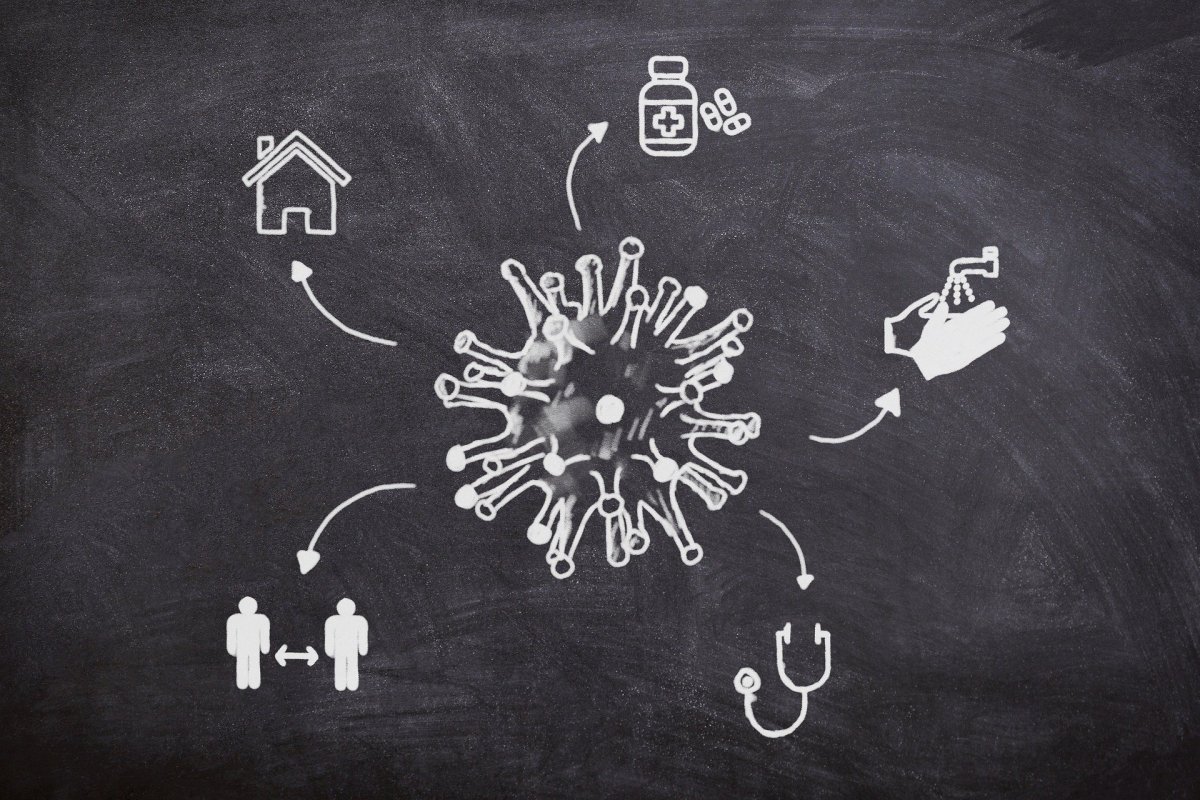
On 27 March Niall Connell, president of the Royal College of Veterinary Surgeons (RCVS), the governing body for the veterinary profession in the UK, addresses his colleagues in a video message providing further guidelines for managing their practices and work during coronavirus pandemic and lockdown.
His message was clear. “The public safety must override the animal welfare”, Connell said with a heavy heart. This is the bitter truth of the current situation we are all in. This also means that the wellbeing and safety of our dogs, more than ever, is in our hands and our sole responsibility. Even though the veterinary practices can remain open, they have every right not to see anyone for routine enquiries, treatments or sale of a medication that is not essential for life.
To make it clear and simple to understand (and take the necessary pressure off the vets’ shoulders) I put together a list of questions covering all the Do’s and Don’t’s. It is based on the most recent guidelines and rules issued by the government, RCVS and BVA (British Veterinary Associations).
Will my veterinary practice be open?
The veterinary practices can remain open. This decision can be made by each individual business, so you will need to call and check. Under the government guidelines, the practice may reduce their working hours, limit the staff members available at the time, the number of clients they see and the ways they see them.
Can a vet see my dog?
The vets can see a limited number of patients to prevent the spread of coronavirus and reduce the risk of COVID19 infection among themselves, their families and clients. They may agree to travel to your home, but only if they deem this essential and risk-free. Many vets can see you and your dog via a video call.
You must always phone the practice before travelling to make further arrangements.
Can I get wormers, anti-flea treatments or vaccinations for my dog?
All these fall under “routine treatments” that are not associated with disease or deterioration, and according to the government guidelines “should not be carried out until further notice”.
If your dog has been seen by a vet in the last 6-12 months, has been given all clear, is in good health and has been on these medications without any side-effects, your vet may agree to either post them to you or issue a prescription that you can use to purchase these treatments online. Any online purchases are done at your own risk, so please double-check the name, dose, expiry date before you administer anything.
Can I use an alternative medication or something “natural” whilst I can’t have my usual ones?
No. Going down this route means that you will be playing a Russian roulette by giving your dog something that may cause a reaction or put his life at risk. Many natural treatments also contain ingredients that are toxic to dogs. None of them are tested to be effective. If anything happens to your dog as a result, you may not be able to take him to the vets immediately.
Are there any exceptions for vaccinations and boosters?
At the moment, any annual booster vaccinations are not urgent or essential. However, according to the BVA and RCVA guidelines “there may be scenarios where, in professional judgement, vaccines are being given to reduce a real and imminent risk of disease: this includes in the face of an animal disease outbreak, or in a scenario where a part of a vaccine course has been given and the animal may be exposed to the disease.
In this case, veterinary judgement is paramount and the risk of leaving an incomplete course must be weighed against the ability to see the animal whilst maximising social distancing.
NB if the Government’s social distancing restrictions last longer than the current review date of 13 April, this guidance may change further.”
This means that your vet may agree to complete a vaccination protocol for your puppy if your puppy has already received the first part of his vaccine, or at high risk of disease due to being unvaccinated. However, do not expect or demand your vet to carry out this procedure as a mandatory treatment.
Bear in mind that if your adult dog has had his regular boosters, he is likely to have enough antibodies to remain safe against the core diseases for at least a few months after his booster is due. The only exception is leptospirosis, so if you live in an area known to be at risk for lepto, keep your dog at home.
Can I still get my repeat prescription for certain drugs?
Some practices will still dispense repeat prescriptions that are essential for the animal’s life. In this case, you will need to contact them in advance to arrange a safe handout or collection.
Although this is not ideal, your veterinary surgeon may agree to issue repeat prescription for any medicine categorised as POM-VPS, NFA-VPS, or AVM-GSL or advise on a suitable alternative. You will need to be registered with the practice, give your full consent, check and administer medication at your own risk, and contact to vet in any emergency situation associated with the treatment. Any vet holds the right to refuse to issue a repeat prescription or provide their client with certain drugs via remote means.
What treatments are classified as essential?
Any treatment that “essential to maintaining the future food supply chain” (which applies to farm animals, not dogs) can be carried out.
For dogs, the veterinary surgeon will only see them “in emergencies or where, in the judgement of the veterinary surgeon, urgent assessment and/or treatment is needed in order to reduce the risk patient deterioration to the point where it may become an emergency in the near future (i.e. within the three-week time frame currently laid out y the government for these measures)”.
What treatments are classified as an emergency?
These include any cases that would normally be seen out of hours or fitted in on the same day regardless of the scheduled appointments (poisoning, allergic reaction, injury, bleeding, loss of coordination, etc). According to BVA, such cases are “immediate threat to life; significant impact on health/welfare and high risk of deterioration of left unmanaged”
Any dog who is in stable condition but can deteriorate due to poor health or trauma, will also be seen.
What if my dog needs to be PTS?
In the current situation, this can be very heartbreaking because you will not be able to accompany your dog to the veterinary practice. Should the vet agree or must carry out euthanasia, he will be the only person who will stay with your dog.
What if my dog becomes unwell while I am self-isolating due to COVID19 infection or because I have symptoms of coronavirus?
Your dog will only be seen if his condition is classified as an emergency. If not, your vet is allowed to postpone the treatment until you either recover or come out of quarantine. The assessment of your dog can be done via video call.
If the dog is in need of an urgent care, the vet can weigh any possibilities of putting his own health, or health of anyone he’s in contact with, at risk before arranging an appointment. Should he decide to go ahead, you will need to find a healthy asymptomatic person to take your dog to the surgery followed by necessary precautions to keep everyone safe.
What steps do I need to follow if I have to take my dog to the veterinary practice?
Not every veterinary practice will provide face-to-face appointments. Most have now issued a letter either via their official website, social media or post to inform their clients. Do your best to find this information before calling.
If you need an appointment or have a question – email for anything that is not urgent or call for any emergencies.
Most vets now ask that the dog is brought to the practice by one person (meaning your other half must stay at home and you need to ensure that your dog travels safely).
Call the practice from the car park upon arrival. Check if they have their own lead and collar, or slip lead. Remove your own lead if they ask you to do so.
Practise social distancing to ensure that you and the member of staff remain two meters apart.
Pay by card, over the phone or via bank transfer. Do not rely on cash or cheques.
Agree on further arrangements of whether you can wait for your dog in the car park or need to return to the practice in a few hours.
When you bring your dog home: wash your hands, wash your dog thoroughly whenever possible, follow with a blow dry, disinfect your car, dog’s collar/lead and bedding.
What else can I do to protect my dog?
To keep everyone’s safe and sane, only take your dog out if it is absolutely essential. Most dogs, including cocker spaniels, can be content at home as long as they have an access to the garden.
If you do need to take your dog out, always wash his paws after each walk, never let him off the lead to avoid any situations when your spaniel can get attacked, run off, injure himself or potentially find and eat something toxic.
Do not take your dog to your relatives as this can increase the risk of viral spread (either via air or surfaces or your dog’s coat) and can make you ill and unable to care for your dog.
Stay at home! Remember that no dog ever died if he hasn’t had walks for a few weeks. Some may get bored, but it’s better to have a bored and healthy pooch than risk his and yours lives.
 PERFECT COCKER SPANIEL