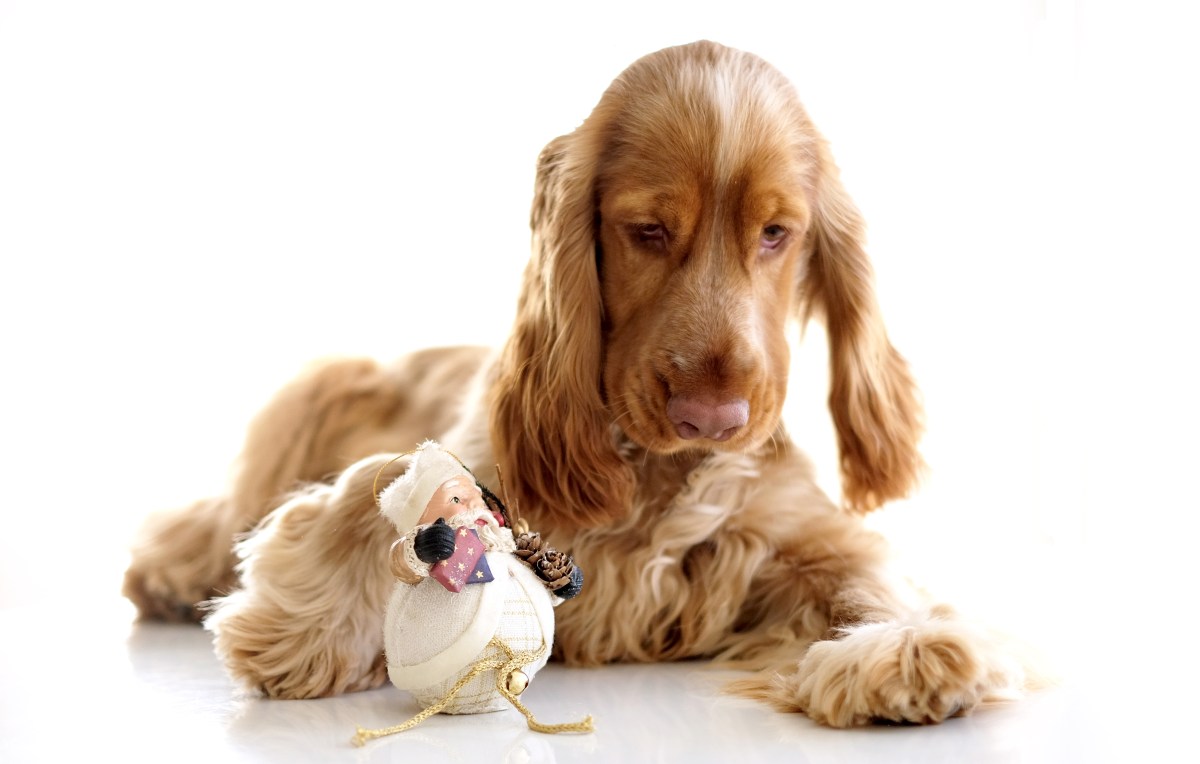
Christmas and dogs, safe and dangerous toxic foods, treats and plants / chocolate, mistletoe, poinsettia, mince pies / Photo of Cooper, sable cocker spaniel puppy with santa clause by Natalia Ashton, perfect cocker spaniel (C)

Your dog friendly Christmas check list

With the holiday season stepping on our “misle-” toes, don’t forget that your beloved pups need extra attention, too. And I don’t mean getting them presents and having fun unwrapping them together. As a self-proclaimed bore, I am talking about “health and safety” rules to keep your lovely curious spaniels happy and well this Christmas…

Put poinsettias out of your dogs reach (or better still, get a faux plant) The chemical compounds called diterpenoid euphorbol esters found in the plant can cause digestive upsets and skin irritation.

Same goes for the mistletoe. The berries contain polysaccharides, alkaloids, and lectins known to be toxic to dogs. The signs of poisoning include digestive issues, low blood pressure, lack of coordination and seizures. Large quantities can be fatal.

Holly contains saponins, methylxanthines and cyanogens that can cause drooling, digestive upsets. Sharp leaves can also cause physical injuries of the mouth and throat.

No Christmas goes without a tree. Be aware of the needles that can get stuck in pups paws. Also watch out for glass baubles (broken glass), vintage decorations (old paints were toxic to pets sometimes), and tinsel (can cause digestive blockages and injury if swallowed).

Christmas dinner is best to be left for humans. The meats and roasted vegetables can often be high in fat increasing risk of pancreatitis and digestive upsets. Most dinners will be made with garlic, onion, leeks or all of them increasing risk of poisoning & haemolytic anaemia.

Mince pies, Christmas puddings and cakes are made with raisins, sultanas, currants & alcohol, all extremely toxic to dogs.

Chocolate contains theobromine that can cause anything from digestive upsets to seizures. Some sweets are also made with xylitol that can cause liver failure and death due to fast drop in blood sugar.

Candles and room fragrances made with paraffin, cheap waxes & artificial fragrances may affect breathing, cause irritation and allergies. Be safe and use organic soy or beeswax based candies for short periods of time.

Happy holidays!

Photo source: Cooper with a Santa Clause photographed by me
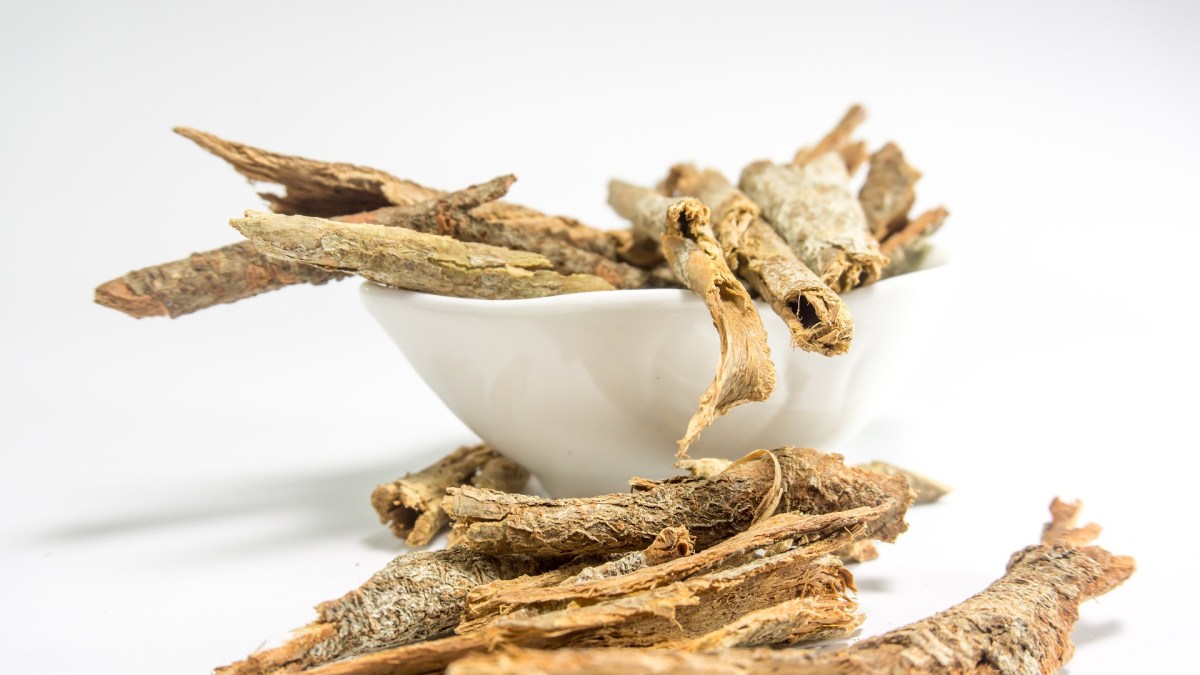
 

Dried cassia, toxicity of cassia plant food additive for dogs, cassia in dog food / Image by Fathima Shanas from Pixabay / first published on perfectcockerspaniel blog

Check your dog’s food for this ingredient

I couldn’t help noticing another ingredient that is added to more and more dog foods. It is called CASSIA and in simple terms, it’s a cheap alternative to cinnamon. In dog food cassia works as a gelling agent and preservative. It’s more likely to be a part of wet food but can be added to kibble also.

Nutritionally, dogs do not need cinnamon or cassia in their diet. While cinnamon can be beneficial for certain conditions when used in very small quantities and short period of time, cassia may cause or worsen liver disease, increase risk of allergies, skin inflammation and irritate digestive tract.

It can become toxic if used for a long period even if the amount it minute. It is approved in EU & a few other countries but as far as dog food research goes, the studies are still going and latest outcome specifies that only purified cassia can be used and in certain amounts (just over 1% of total food) . Considering that not enough research has been done and possibility of side-effects however minor, do check labels of your dog food just to be on a safe side. Cassia can be listed as cassia gum or E427 or E499.

Photo source: image by Fathima Shanas from Pixabay

Can / should I get a cocker spaniel puppy if I work full time? Cocker spaniel and separation anxiety training and tips (C) Image by rawpixel from Pixabay

Q&A | Should I get a cocker spaniel puppy if I work full time?

One of the most asked questions is SHOULD/CAN I GET A COCKER PUP IF I WORK FULL TIME? In short, no.

All dogs are pack animals & feel happy as a part of a family, not on their own. Cockers, known to be naturally prone to separation anxiety, are even more sensitive to loneliness and spending hours in solitude. Here I won’t even go into keeping a puppy in a cage for hours “to avoid mess” because it simply should not cross your mind.

Young pups need a company most of the time and young and grown up dogs can stay on their own for an hour or two provided they had a lovely walk, meal and entertainment.

Personally I feel that a perfect family for a cocker is the one where family members can be at home most of the time either working from home (my case) or working shifts.

If you have to leave your dog alone for hours, find him a dog sitter, friend or relative and let the pooch get used to this arrangement over a period of time. Worth remembering that your cocker will naturally become more independent and detached from you when he becomes a junior, but he will still need to know that you’re somewhere around or about to come home.

How do you find balance between work & keeping your cocker happy?

Photo source: image by rawpixel from Pixabay