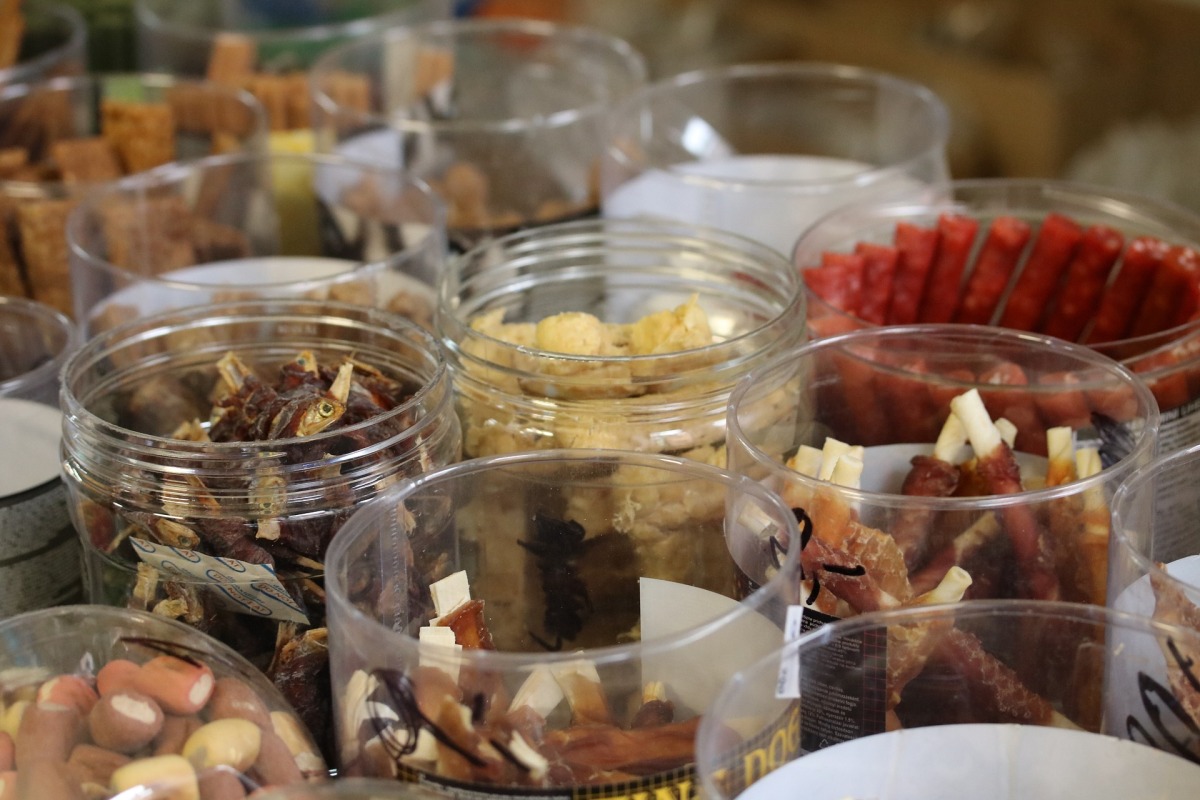
Have you heard of the new dog chews that were introduced recently? Marketed as “natural collagen chews” and a “safe alternative to rawhide”, they sounded too good to be true, so the sceptic in me got really curious.
According to the manufacturers, the “chewllagen” treats are made from “corium”, a part of the skin that consists of collagen and this is what makes the new chews different and safe compared to the typical rawhide.
It does sound really wonderful, promising, convincing and science’y for anyone not particularly concerned with the anatomy of the skin. However, being a nutritionist and a kind of dog mum who likes to get to the bottom of everything that goes into my dog’s mouth, I did think of the physiology part, and that’s when my inner sceptic got partially confused and partially frustrated.
Naturally all mammals have a very similar skin structure. The top layer may be different depending on the species and environment (for example, an alligator skin will certainly be different from the rabbit’s or pheasant, and the latter will, indeed, will look different compared to the human skin), but the layers of the skin and their primarily functions will be very much alike.
All skins can be divided into two main layers – the epidermis (also known as epithelium) or the outer layer, and the dermis (or corium) the thicker layer that lies underneath the epidermis.
The epidermis portion of the skin is very thin yet strong. It forms a barrier between the body and the environmental dangers including pathogens, chemicals and UV rays. It also supports natural detoxification and protects internal organs, muscles, nerves and blood vessels from injuries.
The corium, or epidermis, is a much thicker structure made primarily from collagen that gives the skin strength and flexibility.
The epidermis and dermis are separated from each other by a coloured and textured membrane known as a “glassy layer”.
During the leather manufacturing process the layer of epidermis is removed completely to expose the texture of the glassy layer attached to the dermis following by another phase that deals with hair follicles, glands and colour variations as well as a treatment that kills fungi, bacteria, yeast and other forms of life through the process called putrefaction. To achieve this, all hides must go through several stages that may include soaking in water, acetic acid and glycerine, alcohol processing, freezing, and using chemicals such as lime, sulphides, ammonia, aspartic, hydrochloric and butyric acids, mercuric chloride, lead acetate, and various salts (The Principles of Leather Manufacture by H.R. Procter & The Manufacture of Leather by Hugh Garner Bennett).
If the “glassy layer” is also stripped, the hides look like a white porous sheet that cannot be used for leather-making, but can be further processed and reconstituted to make, you guessed it, rawhide chews!
As a result, any raw hide chew may contain traces of chemicals, possible toxins, bacteria and pathogens. Some can also be treated with flavours and enhances. However, all raw hides are still natural, can be digested (the study that tested various dog treats concluded that all raw hides have a digestibility between 14.2 and 99.5), are a source of protein or, if I am to be precise, collagen, and free from gluten, artificial flavours and ingredients. The raw hides are said to be made from “the deeper layer of the skin”.
They can be dangerous because some dogs would struggle to fully digest the tissue, while others may be sensitive to the chemical compounds used in leather manufacturing. A typical raw hide also adds too much protein to the dogs diet, somost puppies will likely have diarrhoea as a result. Another problem with excessive protein intake in puppies is the potential rapid growth, which can cause skeletal problems in the future. Additionally, any dog may end up with an obstruction after swallowing a large chunk of the treat.
Now we have the new option. The collagen chew. The “all natural”, “high in protein”, “collagen-rich”, “digestible”, “free from grains, gluten and artificial ingredients” perfection made from “the bottom layer of the skin called corium”. In the small print, we are asked to supervise the dog whilst he is playing with the chew and, when the treat “becomes softened and stretched” (which is also very typical characteristic of a natural raw hide chew) – cut this part off before the dog can have the rest back. The new chew is manufactured by the same companies that produce the raw hide treats.
Correct me if I am wrong, but if we compare the notes from the basic skin anatomy I’ve talked about in the beginning of this post and the brief description of leather and hide manufacturing in the middle of my story, corium is the only layer of the skin that can be used for both the raw hides and the collagen chews. Same layer marketed under different name because it happens to have three interchangeable versions (the commonly used “deeper layer” or “hide” is just a synonym for “the derma”, “the corium”, or “the cutis”). There are simply no other layers in the skin that are high in collagen and can be rolled into a cigar or doughnut shape unless, of course, some company will take the bones and congestive tissues and reconstitute them into powder, sheets and the final product.
Which makes the new collagen chew identical to the old raw hide and leaves me feeling like the boy from the Emperor’s New Clothes tale.
I would be very happy to be incorrect, but for now I would prefer to remain very sceptical about the new option and stick with carrots and home made biscuits for my pups instead.
What do you think? Would you consider these chews as a treat for your dog?


 PERFECT COCKER SPANIEL