
May I jump straight to the core of the issue and say that cockers are not hyperactive at all? Yes, they are full of life. Yes, they are bouncy. Yes, their bottom wags so much it must be solar-powered by fairies. Yes, they talk like no other breed. But no, they are not hyperactive as many would suggest.
Because first and foremost cocker spaniels are working dogs. And as such they have a pool of energy reserve to be used as nature intended. If the pool remains unused, overfills or gets emptied until it’s dry, we get what’s commonly known as a hypo-dog or dog with zoomies.
Neither is good, to be honest because, if we use science, the hyperactivity is lead by stress hormones. They control your pup’s response to stimuli and his ability to relax. If he under- or over-dose on emotional or physical work, the body will produce too many hormones (think, cortisol, adrenaline and norepinephrine) and the poor cocker will either end up sprinting about, bouncing off the walls, barking uncontrollably or even biting other dogs in a manner of a bully. Worse, the hormones control other systems in the body like the heart, digestion, reproductive system or immune response.
So we need to keep the hormones – and our pups – happy and content at all times (even though it may seriously pump our own cortisol – but that’s a different story).
And here’s how…
Working dogs like to remain active physically. It does not however mean that you should take your cocker into the field and keep throwing the ball for him to fetch until your arm feels sore and he is out of breath and looks exhausted. It also does not necessarily mean that you must hike for miles every day.
As a flushing breed, cocker would be happy to run and chase that ball, but as any normal dog, he has a certain limit for the chase part: he chases -> the chase is over -> he settles down with his catch of the day. He does not chase and chase and chase… It simply builds up cortisol due to both frustration, inability to rest and relax and the need to constantly run. As a result the spaniel will react by becoming restless, zooming about, barking or biting.
If you like to play a game of fetch – throw the ball a few times for him to play, then play tag and pull (and he must win at the end, especially if he is still young!), allow him plenty of time to switch activity to sniffing the area (you can even throw and hide treats in the grass and trees for him to find as a part of the game!), walking calmly or settling down next to you watch the sunrise.
If you play in the garden, a chew toy to relax with will be fabulous.
The long walks are wonderful, but if once you start and do it every day, be prepared to continue them regularly (read – daily or so) because essentially you have just trained a little athlete. He will become frustrated if the walks are suddenly cut down to a stroll around the block (just like you would if you worked out daily and then had to skip or avoid gym against your will). Once you made a commitment, do your best to stick with the plan.
It’s essential to remember that the length of walks must be determined based on your puppy’s age and health. 5 minutes per month of age per walk, 2-3 times a day – not an hour-long walk at the age of 3 months. The latter will be really hard for his bones and joints.
Once your puppy is old enough, allow at least an hour a day for your walks. To let your dog to be a dog, start your day with a stroll and play (in nature it’s the time when they look for food), return home for breakfast and nap (again, it’s the “hunt -> catch -> eat -> relax” scenario). End your day with another walk, some training and, ideally, sniffing game and chew toy.
Next come the mental stimulation because physical activity alone is never enough. It may stimulate the body, but it leave the brain hungry for information, which you, as a parent, will need to provide. In fact, mental stimulation is probably more important to a dog than physical activity.
They live to learn, sniff, taste and absorb the world around them. 15 minutes of brain training can be just as tiring for a dog as an hour-long walk! Which is rather good to remember if you really cannot go out sometimes because one of you is poorly or the weather lets you down big time.
Allow your clever spaniel smell and examine things while walking. Use puzzle games at home. Scatter food in a garden or house for him to find. Use snuffle mats. Train daily (10-15 minute at a time for pleasure, not hours that may build frustration and stress).
Have a schedule for walks, meals, games, training and travel. Dogs do have tiny clock inside their brain and it never fails. If you skip or postpone any of their favourite activities, they’ll stress out.
Give your beautiful pooch plenty of time to relax and sleep. Do not disturb him. This is when the brain relaxes and recovers. If you skip this step, your dog is likely to react by zooming about by 9 o’clock at night.
Chewing and licking are two other activities that relax any pup. Use chew toys, healthy chews, lickimats and stuffed toys.
Use massage and ttouch technique. You can learn it and DIY. One of the simplest things is to massage your dog’s ears in long gentle strokes, from the central point (ear canal) outwards.
Play music. It may seem like a silly idea, but dogs react differently to different tunes. Mine fall asleep with Gabrielle, Sade and a few classics. You can even find the “dog friendly” music on YouTube and play it to them.
Watch his diet. High protein and carb-free diets can cause hyperactivity in dogs because they create an imbalance of nutrients and hormones that control brain response and ability to relax.
If it’s 8-9pm and your cocker, especially a puppy, starts biting, bringing you toys, pacing around, compulsively licking his paws or running like his eyes are going to pop through the back of his head, do not join in. This hyperactivity is a sign of tiredness. Leave him alone to settle down with a chew or cuddly toy (whatever he prefers) and he will soon fall asleep. Just like all babies do.
You can find more tips on raising a puppy and living with your gorgeous cocker spaniel in my book, Perfect cocker spaniel. It’s a long, but rather helpful, read. Even if I say so myself.
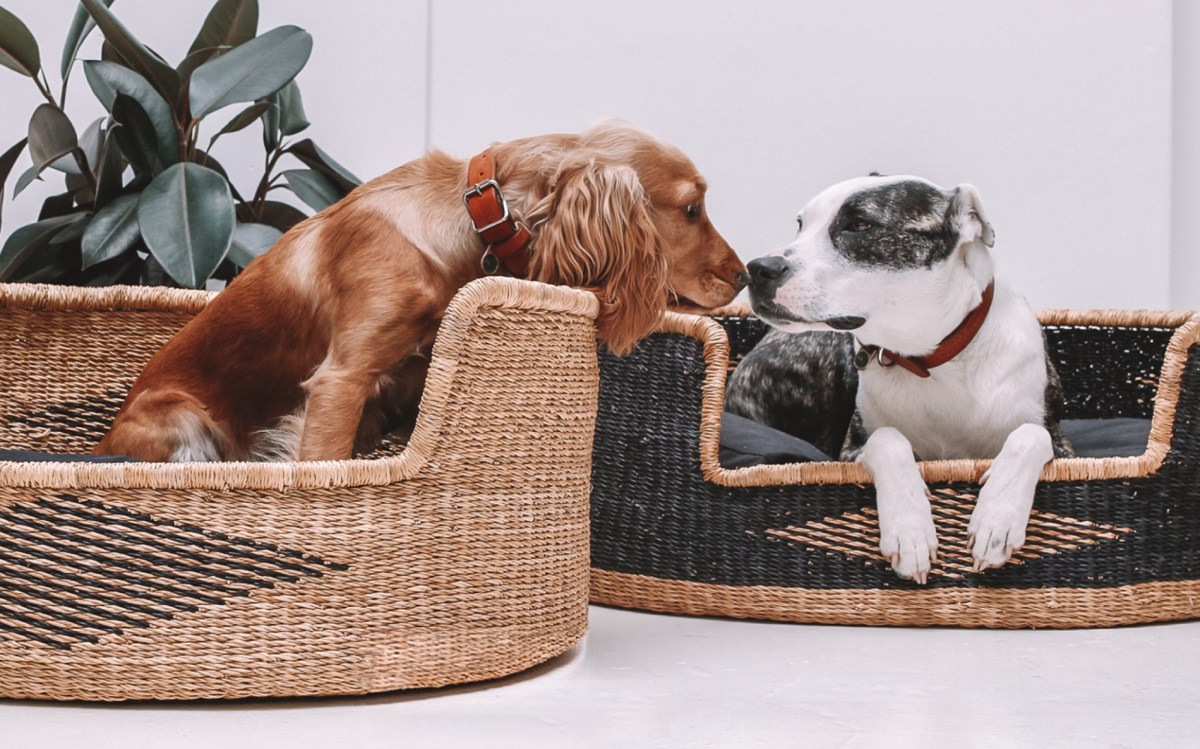
Photo source: Fred, my chocolate and tan boy, photographed by me

 PERFECT COCKER SPANIEL